
Table of Contents
The Disappearance Across the Lane
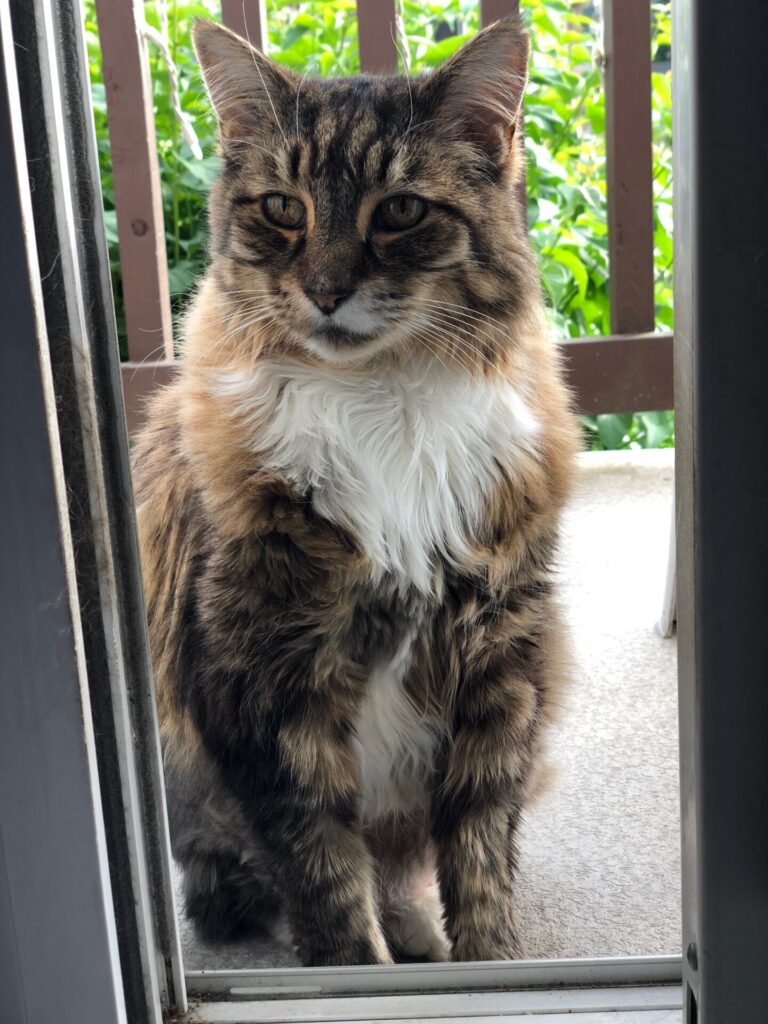
Jack loved lounging on a neighbour’s porch. It was not far, just across the lane, close enough for Laurel to see him from her window on most days. He was a quiet presence, the kind of cat who seemed to have a place in every corner of the neighbourhood.
But one afternoon, that peaceful routine changed.
A neighbour, thinking Jack was a stray who had simply claimed her porch as his own, called the SPCA and asked that he be picked up. By the time Laurel realized he had not come home, Jack was already gone. He had not wandered miles away, but he had suddenly slipped out of her reach.
The house felt too still without him. Ten days passed in a long stretch of worry and hope. Every hour carried the ache of not knowing where he was or if he was safe. “It was awful not knowing where my cat was and if he was ok,” Laurel remembers.
The Call for Answers
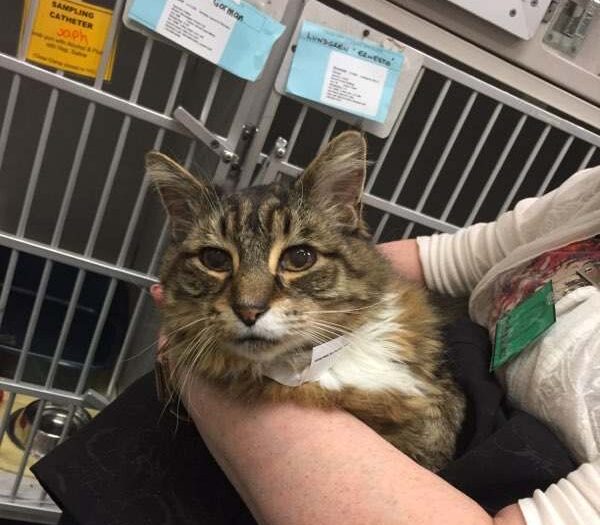
Eventually Laurel did what every worried guardian does. She called her local SPCA and described her missing boy in as much detail as possible. She even shared his tattoo information, hoping it might help the staff identify him.
That is when she learned something she never expected. Because Jack was a rescue, the tattoo information had never been transferred into her name. The shelter had him, but they had no way of knowing he belonged to her.
A simple oversight had stretched into ten painful days.
Still, Laurel held on to hope. Somewhere, she felt Jack was waiting.
The Reunion That Said Everything
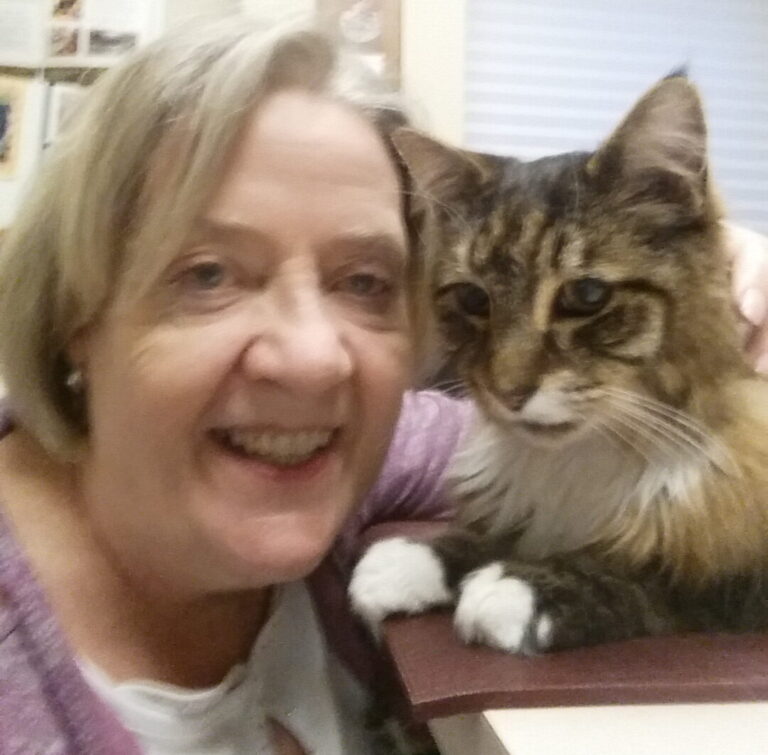
When the SPCA confirmed they had a cat matching Jack’s description, Laurel did not hesitate. She went straight to the shelter, her heart pounding, afraid to hope too much.
But the moment she saw him sitting in his kennel, looking up with that unmistakable feline expression that blended relief and mild annoyance, she knew it was him.
“He gave me a look like what took you so long to come and get me,” she says. “I scooped him up from his cage. I was so happy, and he cuddled right into my arms.”
Jack relaxed into her chest as if he had been waiting for that moment all along.
The Oversight That Nearly Kept Them Apart
Jack’s rescue tattoo was the key to bringing him home, but it only worked because Laurel knew it existed.
She had not realized the information was still under the previous owner’s name, not until it mattered most.
“Now I know you need to update the tattoo info if your pet was tattooed by a previous owner,” she says.
It is a lesson many guardians learn only after a scare. A microchip or tattoo can help, but only if the contact information is up to date.
A Reminder to Every Guardian
Jack did not roam far. He was only across the lane. Yet even short distances can turn into long separations. Laurel’s story shows how quickly a misunderstanding can create days of heartache and how something as small as a tattoo number can change everything.
Her experience reminds us that identification matters for every pet, not just the ones who wander far. All it takes is a well meaning stranger, an unexpected noise, or an open door for a beloved cat to disappear from sight.
The Power of Proper Identification
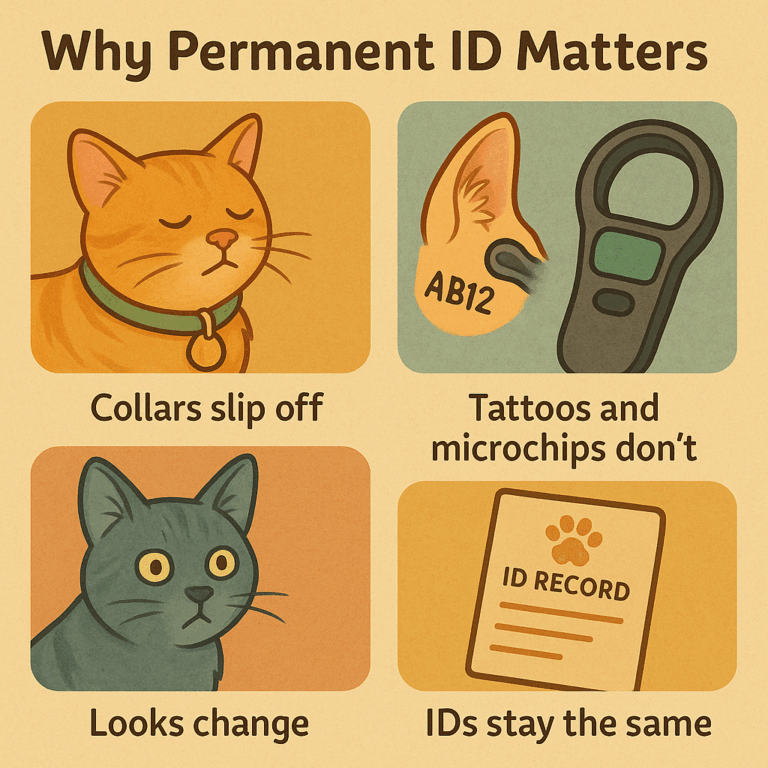
Jack’s tattoo became his bridge back home. It could have connected him to Laurel much sooner if the information had been updated.
For every Jack, there are many cats whose guardians never get that life changing call because their microchip is not registered, their tattoo is linked to old information, or a previous owner is still listed.
Permanent ID is important, but accurate contact information is what turns it into a lifeline.
The BC Pet Registry helps ensure veterinarians and shelters across the province can quickly look up guardian details. Many families are reunited within hours instead of days.
Kindness Makes All the Difference
Jack’s story also highlights the role everyday people play in animal safety.
A neighbour believed she was helping. The SPCA cared for Jack until Laurel found him. Laurel kept searching until she reached the right person.
Every reunion is a small community effort. For every lost pet, there is someone searching, someone caring, and someone ready to help. Stories like Jack’s remind us how much that sense of community matters.
Takeaways: Protecting the Pets We Love
Inspired by Jack’s journey? Here are gentle steps that help keep your pets safe:
- Update tattoo or microchip information right after adoption,
especially if the ID came from a previous owner. - Register your pet with the BC Pet Registry for fast access by shelters.
- Check your contact information every year, especially after moving.
- Add a backup contact in case you cannot answer the phone.
- Keep recent photos that show your pet’s unique markings.
- Support your local SPCA. Every reunion begins with care and compassion.
Be a Part of the 80% Responsible Owners
During our recent events, we scanned hundreds of pets, all with microchips implanted. Only to discover that approximately 20% of the pets’ microchips are not linked to any registries in North America. We recommend all pet owners to double check their pet’s registration and directly registering with us. All you need is the microchip number and/or tattoo code to start the online registration process. For a small, one-time fee of $45, your pet will be protected for a lifetime and you will also have contributed to the life-saving work of the BC SPCA.
The Heart of It All
Laurel will never forget the moment she lifted Jack from his kennel. The way he tucked himself into her arms, the relief of holding him close after ten days of fear, and the knowledge that he was finally safe again. “Thank goodness he was tattooed and we were reunited,” she says.
That is the feeling every guardian hopes for. The shift from heartbreak to relief, from worry to warmth, from lost to home.
And for every Jack still out there, there is a family waiting and a community ready to help bring them back.
👉 Make sure your pet’s ID is current and registered with the BC Pet Registry. A small update can make a world of difference.
FAQ
Q: What should I do if my cat goes missing in BC?
Contact your local SPCA right away, file a lost pet report, and share clear, recent photos. Search your neighbourhood during quiet hours such as early morning or late evening, check under porches, in garages, and around sheds, and post on local lost pet social media groups. Make sure your pet’s microchip or tattoo is registered and updated with the BC Pet Registry and marked as lost so shelters and clinics can contact you if your cat is found.
Q: How does the BC Pet Registry help find lost pets?
The BC Pet Registry is a province wide database that links microchip and tattoo numbers to guardian contact information. When a lost pet is brought to a participating veterinary clinic or shelter in BC, staff can scan for a microchip or look up a tattoo, search the registry, and quickly reach the guardian. This often turns a long search into a reunion that happens within hours.
Q: Do indoor cats need microchips or tattoos?
Yes. Even indoor cats can slip outside through an open door or window, or escape during a move or emergency. A collar can fall off or be removed, but a microchip or tattoo provides permanent identification that stays with your cat for life and gives them the best chance of being returned home.
Q: What should I do if I find a lost cat?
If the cat is friendly and you can safely transport them, bring them to your local SPCA, animal shelter, or veterinary clinic so they can be scanned for a microchip or checked for a tattoo. You can also post clear photos and a description on local community and lost pet pages, and let neighbours know. Try not to assume the cat is abandoned. Many lost cats are loved family members who are trying to find their way home.
Q: How long do lost cats usually survive outside?
Many lost cats can survive for weeks or even months outdoors, depending on weather, traffic, predators, and access to food and shelter. Cats often hide nearby and may be too scared to come when called. That is why patient, repeated searching, especially during quiet times of day, is so important, along with proper identification.
Q: Is microchipping required by law in BC?
Microchipping is not mandatory in all of BC, but some municipalities strongly encourage or require permanent identification for pets. Even where it is not required, microchipping is one of the most reliable ways to make sure your pet can be identified and returned to you if they are lost.
Q: How much does it cost to microchip a cat or dog in BC?
Microchipping usually costs between 60 and 120 dollars at many veterinary clinics in BC. Some shelters and community events also offer low cost or free microchipping days. During your pet’s microchipping appointment, ask your veterinarian these 5 important questions: https://bcpetregistry.ca/stories/information/questions-to-ask-your-vet-before-microchipping/
Q: Can I update my contact information on BC Pet Registry?
Yes. You can update your contact details anytime at https://bcpetregistry.ca/login/ . Keeping your phone number, address, and backup contact current is essential. Outdated contact information is one of the most common reasons reunions are delayed, just like in Jack’s story where outdated tattoo details kept him and Laurel apart for ten days.