Table of Contents
The Cat Who Appeared Out of Nowhere
When Carol noticed the orange cat lurking at the edge of her new yard, she assumed he belonged to a neighbour. Cats wander. That’s what they do.
But over the following weeks, something changed. The cat grew thinner. His once sturdy frame began to shrink. Carol started leaving food out, slowly, gently, without expectation.
“It took a while for him to trust me,” she recalls. “But once he did, I noticed he had a tattoo in his ear.”
That small marking would change everything.
The Phone Call Nobody Believed
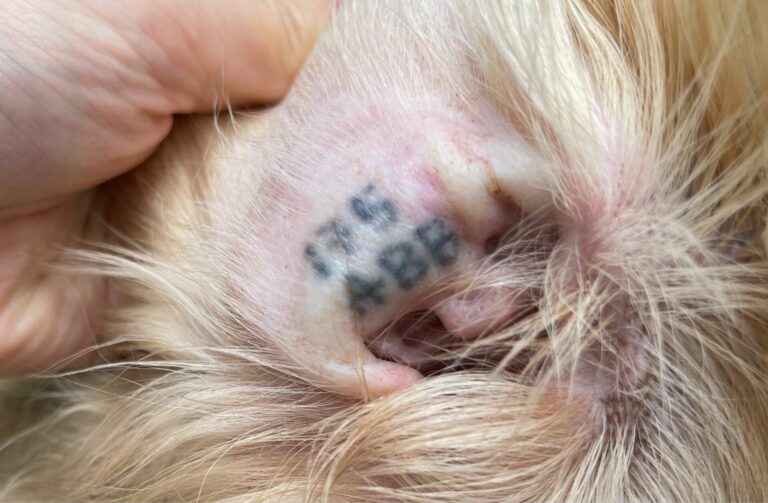
With the help of a local vet, Carol was able to trace the tattoo code and finally reach the right person.
When the owner answered, she did not believe it.
“She thought I was pranking her,” Carol says. “Her cat had been missing for more than two years.”
Carol had one response. “How else would I know his name?”
She gave the woman her address and waited.
The Reunion on the Front Lawn
When the owner arrived and saw her cat, she dropped to the grass.
“She grabbed him and sat on my front lawn, bawling her head off,” Carol remembers. “He had been missing for over two years.”
The next day, the woman returned with a plant as a thank you. Carol still has it. She also kept the card.
The cat’s name was Toby. Carol calls him Lucky Toby now.
Why Toby Made It Home When Most Cats Don’t
According to the ASPCA, only about 2 percent of lost cats without identification are ever reunited with their families. Thankfully, Toby was not one of them. The tattoo inside his ear made all the difference.
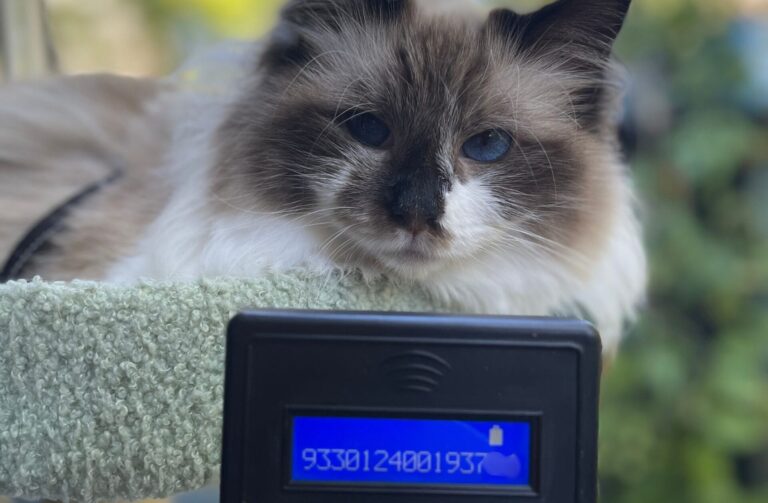
Pet tattoos and microchips serve as permanent identification that cannot fall off, fade, or be removed. When a found pet is checked at a veterinary clinic or shelter, that small code can connect them to their guardian’s contact information.
“Without that tattoo, his story might have ended very differently,” Carol says.
What to Do If You Find a Stray Cat
Carol’s experience offers a roadmap for anyone who encounters a wandering cat:
- Do not assume they are unwanted. Many “stray” cats have families desperately searching for them.
- Watch for weight loss. A cat losing weight may not be getting regular meals at home.
- Check for identification. Look inside the ears for tattoos. Any vet or shelter can scan for microchips for free.
- Take them to a vet or shelter. Even if years have passed, someone may still be hoping — and professionals can help make the connection.
How to Protect Your Own Pet
Toby’s story is a reminder that preparation matters. Here is what every pet guardian should consider:
- Register your pet’s microchip or tattoo with a reliable database like BC Pet Registry
- Update your contact information whenever you move or change phone numbers
- Add a backup contact so you can be reached even if you are traveling
- Keep recent photos showing your pet’s unique markings
The Numbers That Matter
During recent BC Pet Registry community events, staff scanned hundreds of pets, all with microchips. Approximately 20 percent of those chips were not registered with any North American database.
A microchip without registration is like a phone without a phone number. It exists, but it cannot do its job.
What Toby’s Story Really Means
Two years is a long time. Long enough for hope to dim. Long enough to assume the ending has already been written.
But Toby’s story proves that love does not expire. Somewhere, for two years, his family carried the quiet grief of not knowing. And somewhere else, Toby was surviving, waiting for the right person to look closer.
Carol was that person.
“I’ll never forget her face when she saw him,” Carol says. “That’s what makes it worth it.”
Be a Part of the 80% Responsible Owners
During our recent events, we scanned hundreds of pets, all with microchips implanted. Only to discover that approximately 20% of the pets’ microchips are not linked to any registries in North America. We recommend all pet owners to double check their pet’s registration and directly registering with us. All you need is the microchip number and/or tattoo code to start the online registration process. For a small, one-time fee of $45, your pet will be protected for a lifetime and you will also have contributed to the life-saving work of the BC SPCA.
Ready to Protect Your Pet
Registration with BC Pet Registry takes minutes and costs 45 dollars, a one time fee that protects your pet for life. Every registration also supports the life saving work of the BC SPCA.
Register now at bcpetregistry.ca
FAQ
Q: How long can a lost cat survive outdoors?
Many cats survive outdoors for months or even years, depending on access to food, shelter, and safety. However, survival does not mean they are thriving. Identification significantly improves their chances of being reunited with their families.
Q: Do indoor cats need microchips?
Yes. Even indoor cats can escape through open doors or windows, or during emergencies. A microchip provides permanent identification that cannot fall off like a collar.
Q: What should I do if I find a cat with a tattoo?
Contact any veterinary clinic or shelter. They can help trace the tattoo code. Tattoos often link directly to an owner or registry and can lead to a reunion, even years later. Learn more about tattoo codes here.
Q: Is microchipping required by law in BC?
While not provincially mandated across all of BC, microchipping is strongly encouraged and some municipalities require it. Regardless of legal requirements, it remains the most reliable form of permanent identification.
Q: How much does it cost to register a pet’s microchip?
Registration with BC Pet Registry is a one time fee of 45 dollars per pet. This covers lifetime protection and supports the life saving work of the BC SPCA.