
Here’s something that keeps shelter workers up at night. Approximately 20 percent of microchipped pets have chips that are either unregistered or linked to outdated contact information. That means nearly half of all “protected” pets are not actually protected at all.
If you are reading this thinking, “That’s not me, my pet is microchipped,” I have one question. When was the last time you verified that your pet’s microchip is registered with your current phone number and address?
Most pet owners cannot answer that. And that is why we need to talk about what pet microchip registration in BC actually means, and how to make sure your furry family member can find their way home.
Table of Contents
The Uncomfortable Truth About “Microchipped” Pets
Let’s clear up a common misconception. When your vet implants a microchip, your pet is not automatically protected. The chip itself is just a tiny piece of technology, about the size of a grain of rice, that stores a unique identification number. That is it. No GPS tracking. No magic homing beacon. Just a number.
That number only becomes useful when it is registered in a database that links it to your contact information. Without registration, a microchip is essentially useless.
Think of it like having a phone with no phone number. The device exists, but nobody can reach you.
The “My Vet Has It” Myth
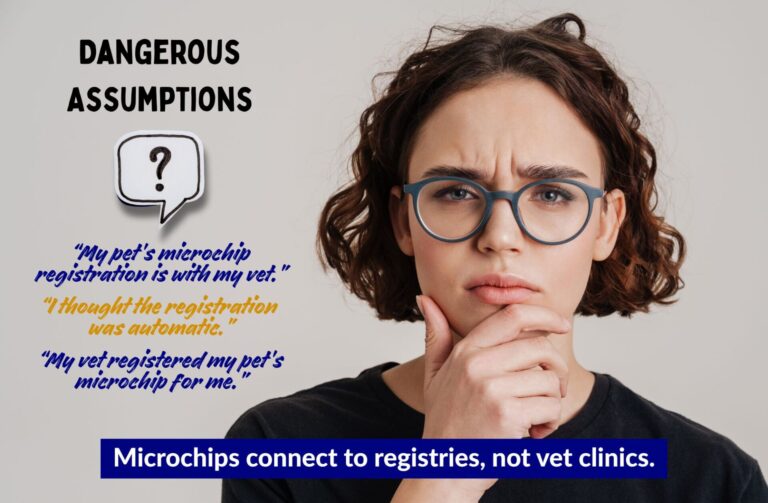
At BC Pet Registry community events, we hear this constantly. “My pet’s microchip information is with my vet.”
Here is the problem. When a lost pet is found and brought to a shelter or veterinary clinic, staff do not call every vet in the province asking if they recognize the chip number. Instead, they scan the chip, retrieve the number, and search pet registry databases. If your chip is not registered, or the database has your old phone number from three moves ago, the trail goes cold.
Your pet could be safe, but neither of you would ever know how to reconnect.
This scenario played out for a Qualicum Beach family when their one-year-old dog Jozie bolted after a fallen tree startled her on an off-leash trail. She ran about two kilometres toward town before good Samaritans caught her and brought her to a veterinary clinic. Staff scanned her microchip, found her owner’s current contact information, and called immediately, leading to a fast and happy reunion.
Not every family is that lucky.
How to Check If Your Pet’s Microchip Is Actually Registered
Let’s fix this right now. Here is a step by step process to verify your pet is actually protected.
Step 1: Find your pet’s microchip number and registry. Check your adoption paperwork, vet records, or the card you received when the chip was implanted. Cannot find it? Call your vet or book an appointment with any BC SPCA location to have your pet scanned for free.
Step 2: Confirm which registry holds the chip. Not all chips are registered in the same database.
Step 3: Log into your registry account and verify your information. Check everything. Phone number, email, address, emergency contacts. Is it all current? If you adopted from BC SPCA after 2018, your pet was automatically registered with BC Pet Registry. Log in here to verify.
Step 4: Add a backup contact. If your pet is found while you are traveling or your phone battery is dead, a backup contact means someone local can step in right away.
A Quick Self Check: Is Your Pet Actually Protected?
Ask yourself these five questions:
- Do I know my pet’s microchip number?
- Do I know which registry it is with?
- Is my current phone number on file?
- Is my current address on file?
- Do I have an emergency backup contact listed?
If you cannot answer “yes” to all five, your pet may not make it home if they get lost. The good news is that fixing this usually takes about ten minutes.
What to Do When Life Changes
Life does not stand still, and neither should your microchip information. Proper pet microchip registration in BC means keeping your details current through every move, phone change, and life transition.
You moved.
Your registry does not update automatically when you change your address with Canada Post. Log into your account and update it manually. While you are there, update your phone number and emergency contact too.
A Prince George pet owner learned this firsthand when her cat escaped just days after moving. Because she updated her BC Pet Registry information right away, the reunion happened quickly. Read her story here.
You changed your phone number.
This is the number one reason found pets do not make it home. A shelter calls the number on file, hears “no longer in service,” and hits a dead end. Update your registry within 24 hours of getting a new number.
You adopted a pet that is already microchipped.
Ask for the microchip number and which registry it is with. Request a transfer of ownership form and complete it before you leave if possible. Then verify the transfer by logging into the registry yourself. Do not assume the shelter took care of it.
You are rehoming your pet.
Complete the transfer of ownership with your registry. BC Pet Registry offers this at no additional cost. Provide the new owner with the microchip number so they can verify everything is in their name.
How Community Events Help Keep Pets Safe
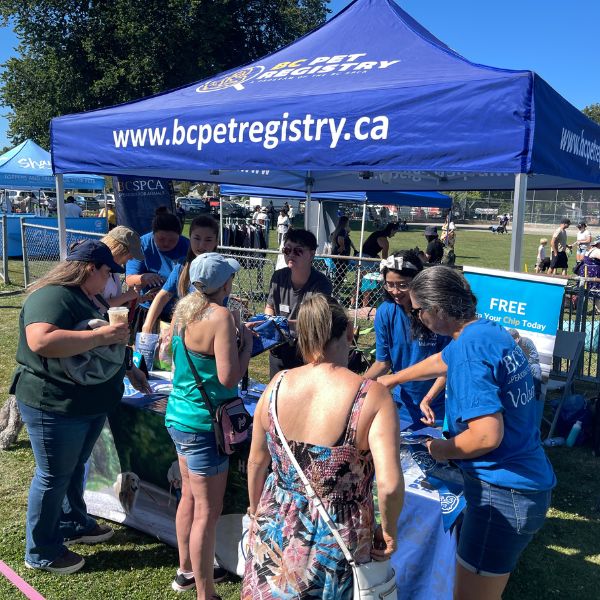
One of the most powerful tools in pet protection is not technology. It is community.
BC Pet Registry regularly partners with local organizations to host free microchip scanning and registration events across the province. At events like Pet A Palooza Vancouver and clinics at BC SPCA locations, hundreds of pet owners discover gaps in their protection they did not know existed.
At one recent event, staff scanned hundreds of pets, all with microchips. Approximately 20 percent of those chips were not registered with any database. Those owners believed their pet microchip registration was complete. It was not.
These events do more than scan chips. They educate pet owners, connect neighbours who care about animal welfare, and create a network of people who look out for each other’s pets. When Jozie went missing in Qualicum Beach, it was the microchip linked to current contact details that made the phone ring and brought her home quickly.
Pet safety is not just about your own pet. It is about building a community where every pet has a better chance of getting home.
What If You Find a Lost Pet?
Knowing what to do when you find someone else’s pet is just as important as protecting your own.
If you find a cat or dog that appears lost, check for a collar and tags first. If there is no visible ID, take the pet to any veterinary clinic or BC SPCA location to be scanned for a microchip. This service is free.
If a chip is found, the vet or shelter will search the registry and contact the owner on file. This is why pet microchip registration matters. You do not receive the owner’s personal information directly. The registry acts as the middle step to protect everyone’s privacy.
If there is no chip or it is not registered, post a found pet report on the BC SPCA Pet Search, check Facebook groups like Missing Pets in BC, and put up posters nearby. Many lost pets are found within a few blocks of home.
The Bottom Line
Pet microchip registration in BC is not complicated, but it does require action. A microchip only works if it is registered. Registration only works if your information is current.
Take ten minutes today to verify your pet’s protection. Log into your registry account. Check your phone number, address, and emergency contacts. If anything is out of date, fix it now.
If your pet’s microchip is not registered yet, register with BC Pet Registry today. It is a one time fee of 45 dollars that covers your pet for life and supports the BC SPCA’s mission to protect animals across the province.
Because the moment your pet slips out an open door, you will want everything in place to bring them home.
Be a Part of the 80% Responsible Owners
During our recent events, we scanned hundreds of pets, all with microchips implanted. Only to discover that approximately 20% of the pets’ microchips are not linked to any registries in North America. We recommend all pet owners to double check their pet’s registration and directly registering with us. All you need is the microchip number and/or tattoo code to start the online registration process. For a small, one-time fee of $45, your pet will be protected for a lifetime and you will also have contributed to the life-saving work of the BC SPCA.
FAQ
Q: How do I know if my pet’s microchip is registered?
Check with your vet or reach out to the BC Pet Registry team via info@bcpetregistry.ca for guidance specific to your situation.
Q: Does it cost money to update my microchip information?
Unlike other for profit registries, updates with BC Pet Registry are always free. You can change your phone number, address, or emergency contacts anytime through your online account.
Q: I adopted my pet. Is the microchip already in my name?
Not always. Some rescues complete the transfer, but many leave it to the new owner. Always verify by logging into the registry yourself.
Q: Can I register any microchip with BC Pet Registry?
Yes. Any microchip can be registered. All you need is the chip number.
BC Pet Registry is a program of the BC SPCA, created in 2015 with the sole goal of reuniting more lost pets with their families. Learn more about our mission.