
Salem survived a wildfire, severe injuries and two weeks away from his family. But he did not have a microchip to help identify him. His reunion depended on a social media post and a community that refused to stop looking. His story is a powerful reminder to microchip your pet, register the chip and check your contact information before an emergency happens.
Salem’s Wildfire Reunion
When wildfires force families to evacuate, pets can disappear in the chaos. Microchip registration before an emergency gives lost pets a better chance of finding their way home.
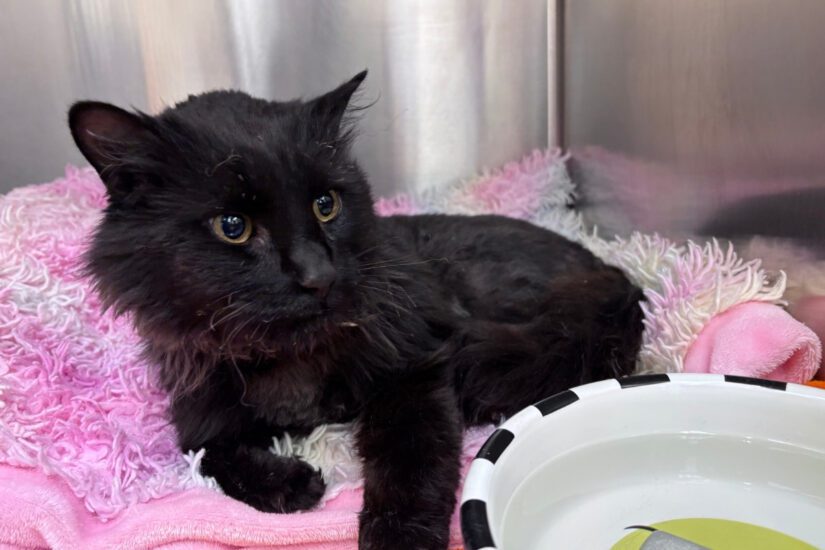
This summer, one cat named Whisky found himself behind the fire line. He was alone, injured and surrounded by smoke and flames. Fortunately, a compassionate rescuer spotted him and stopped to help.
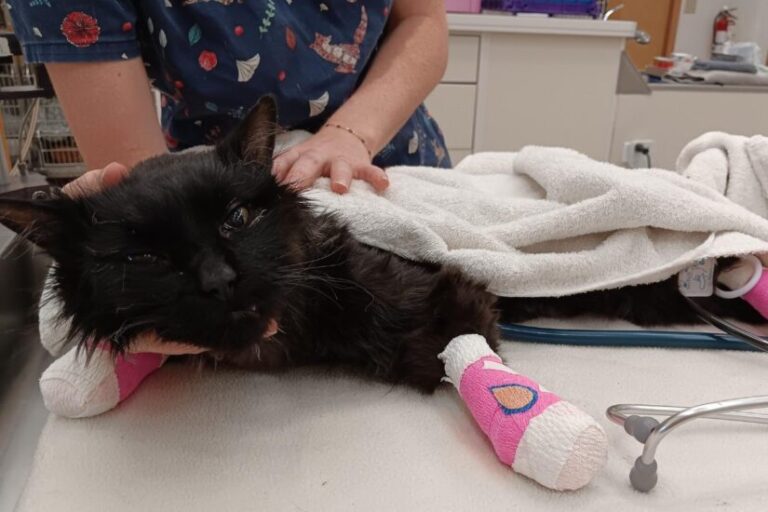
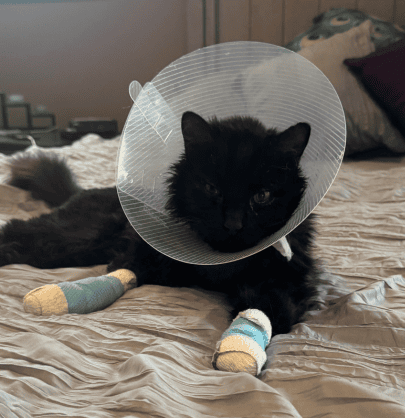
The small black cat had severe burns on the bottoms of his feet. He also suffered from dehydration and a painful ear mite infestation. As a result, he needed urgent veterinary care.
This story is adapted from the BC SPCA’s September 10, 2026 story, “The cat behind the fire line: how a community coming together helped reunite a family.” We are sharing Salem’s story from a BC Pet Registry perspective to highlight why preparing your pet’s identification before an emergency matters.
From Whisky to Salem
Veterinarians quickly started treating his injuries. They provided pain medication, fluids, wound care and regular bandage changes. Then, once he became stable, he moved into a foster home.
His foster family named him Whisky because the fire singed his whiskers. However, they soon discovered much more than an injured stray.
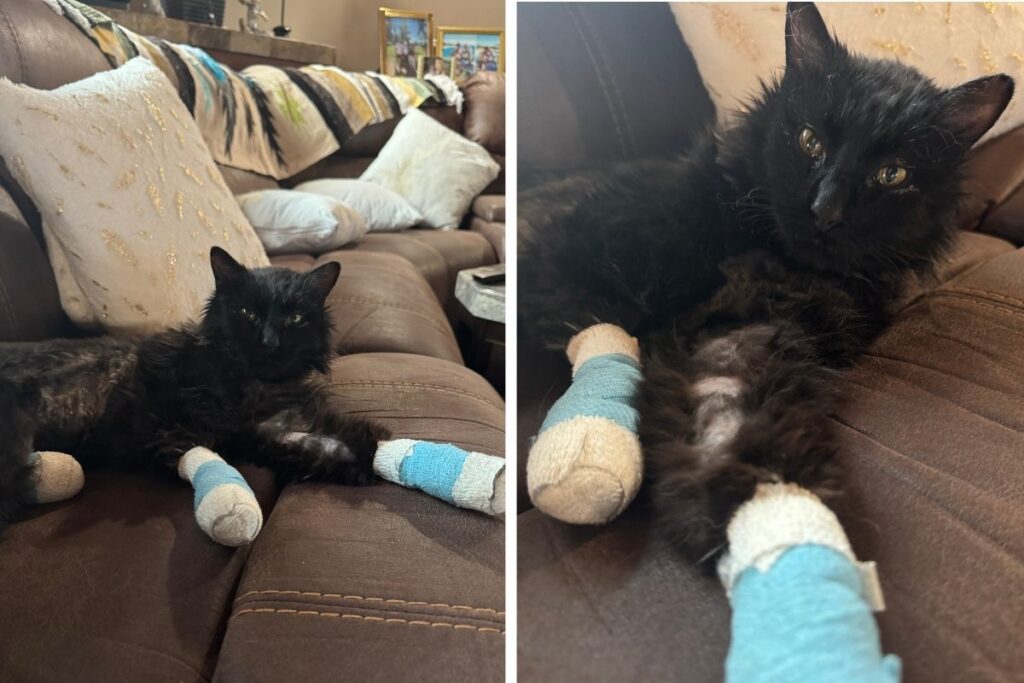
Whisky was affectionate, litter trained and eager for company. He followed his foster caregiver’s partner everywhere and loved to snuggle. Therefore, one question remained: Who was this cat?
His friendly personality suggested that someone could be missing him.
The BC SPCA shared Whisky’s photo and story on social media. Meanwhile, people affected by the wildfires continued sharing the post. Eventually, it reached a family who recognized him.
They knew him as Salem.
The family had evacuated during the wildfire and spent days searching for their beloved cat. They had started to fear the worst. Then they saw Whisky’s photo.
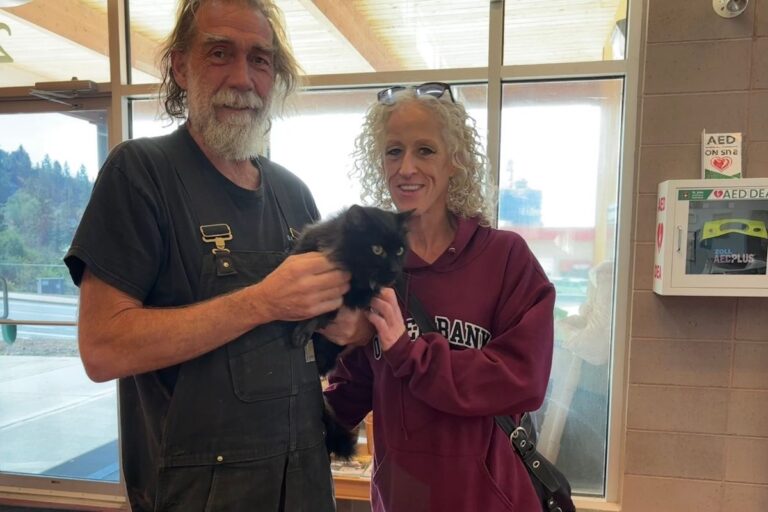
After comparing photos and sharing details, the family knew they had found Salem.
Two weeks after his rescue, Salem finally returned home.
Salem did not have a microchip
Salem’s reunion came through a social media post, a watchful eye and a compassionate community. However, his story also highlights something every pet guardian should consider before an emergency.
Salem did not have a microchip.
That meant his family could not rely on permanent identification to help connect him with home. Instead, his reunion depended on people recognizing his photo and sharing his story.
Salem was lucky.
Your pet should not have to rely on luck.
That is why microchip registration before an emergency matters. A microchip provides a unique identification number. Registration connects that number to your contact information.
Most importantly, your pet needs both.
Check your pet’s microchip registration now
Wildfires can change everything within minutes. Pets can escape through open doors, become separated during evacuation or get lost somewhere unfamiliar.
Therefore, emergency preparation should include your pet’s identification.
First, make sure your pet has a microchip. Next, make sure that microchip is registered with your current contact information. Then, log in to your BC Pet Registry account yourself and confirm that everything remains accurate.
Also, keep your pet’s ID tag current. Check your phone number, email address and home address. Finally, make sure someone you trust knows how to access your pet’s information if you cannot.
Do not wait until your pet goes missing to discover that something is outdated.
A few minutes today could save precious time during an emergency.
Free microchip clinics for wildfire-affected communities
If you live in a community affected by this year’s wildfires, the BC SPCA is also offering free microchip clinics at select locations. Event details listed below or visit this link for more information: BC SPCA offering free microchips for pets in the Okanagan and Kamloops areas – BC SPCA
Kelowna event details
Date: Sunday, September 20
Time: 1 to 5 pm
Location: 1853 Munson Road, Kelowna
Registration: https://kvcfoundation.ca/events/
Penticton event details
Date: Wednesday, September 23
Time: 2 to 4:30 pm
Location: BC SPCA Penticton Veterinary Hospital, 15 Duncan Ave E, Penticton
Registration: https://spca.bc.ca/ways-to-help/bc-spca-emergency-response-services/microchip-clinics/
Kamloops event details
Date: Friday, September 25
Time: 1 to 4 pm
Location: BC SPCA Kamloops Spay Neuter Clinic, 2816 Tranquille Road, Kamloops
Registration: https://spca.bc.ca/ways-to-help/bc-spca-emergency-response-services/microchip-clinics/
Get your pet microchipped for free if they don’t already have one!
Your pet may never get a second chance
Salem made it home because people kept looking, sharing and caring.
Not every lost pet gets that same chance.
That is why microchip registration before an emergency should be part of every pet guardian’s emergency plan. Microchip your pet, register the chip and check your information yourself.
Then, keep your ID tags and contact details current.
Take a few minutes today. Log in and check your pet’s microchip registration before you need it. Need help? Email the BC Pet Registry team at info@bcpetregistry.ca for support.
FAQs
1. Why should I register my pet’s microchip before an emergency?
A microchip provides your pet’s identification number, but registration connects that number to your contact information. Checking your registration before an emergency can help prevent outdated information from slowing down a reunion.
2. Is having a microchip enough to identify my lost pet?
Not necessarily. A microchip provides an identification number. You also need to register that number with your current contact information so someone can connect your pet to you.
3. How can I check whether my pet’s microchip is registered?
Log in to your BC Pet Registry account and review your pet’s information. Make sure your phone number, email address and other contact details are current.
4. What else should I include in my pet’s emergency plan?
Keep your pet’s microchip registered and your ID tag current. Also, keep your contact information updated and make sure someone you trust knows how to help if you become separated from your pet.
5. Where can wildfire-affected pet guardians get a free microchip?
The BC SPCA is offering free microchip clinics in Kelowna, Penticton and Kamloops in September 2026. Registration is required for the clinics, and eligibility may apply.