
You’ve taken the first step to microchip your pet — now it’s time to register it properly. But not all pet registries are the same. Some for-profit registries encourage vets not to register microchips, charge high fees for essential updates, or shut down without warning. This guide reveals questionable practices and highlights key points to know before registering your pet’s microchip in BC. Protect your pet and ensure your information is accurate by choosing a trusted registry.
Avoid Questionable Practices When Registering Your Pet’s Microchip
You’ve gotten your pet microchipped — congratulations! But before you register, stop and think. Not all microchip registries are equal, and choosing the wrong one can put your pet at risk. Many for-profit registries engage in questionable practices that leave pets stranded or guardians paying unnecessary fees. This article outlines key points to know before registering your pet’s microchip in BC, helping you make an informed decision.

Why Transparency Matters
1. Unregistered Microchips Put Pets at Risk
Some for-profit registries encourage veterinary clinics not to register microchips and leave them to pet owners. The result? Nearly 1 in 5 pets in BC have unregistered microchips. When a stray pet with an unregistered microchip is brought to a shelter or clinic, staff can’t reach the guardian directly. This unnecessary delay can separate pets from their families longer than needed.
2. The Upsell Problem: Why Microchips Are Left Unregistered
Why would a registry ask clinics not to register a microchip? Because it opens the door for upselling later. When pet owners are told to register their pets themselves, it increases the chance they’ll be prompted to buy “premium plans.” These plans can cost up to $199 just to add essential information like alternate contacts, photos, or medical and behavioral notes. Many veterinarians aren’t aware this practice exists — and they, too, deserve transparency.

The Risks of Unreliable Registries
1. When Registries Disappear Without Warning
Some for-profit registries have shut down or disappeared without advance notice — taking all owner and pet information with them. When this happens, microchips become untraceable, leaving pets stranded with no way to reach their guardians. It’s a heartbreaking and avoidable outcome that highlights why it’s crucial to choose a reliable, long-standing registry.
2. “Free” Registries Aren’t Free
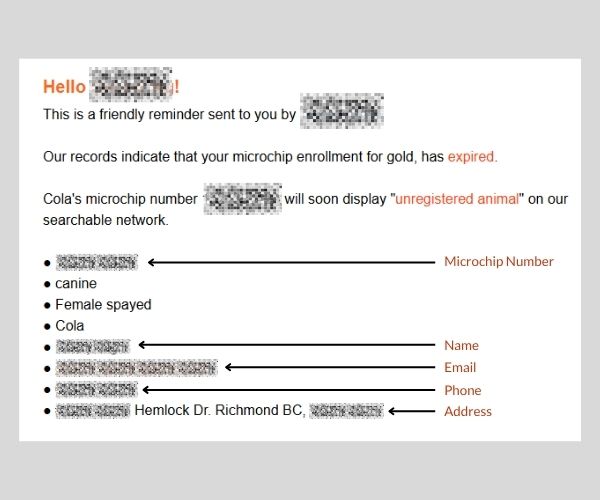
“Free” may sound appealing, but free pet registries can put both you and your pet at risk. Some of these sites collect personal information and have recently been known to email pet owners claiming their registration has “expired,” then request unexpected payments. Pet guardians should be cautious when providing personal information to ‘free’ or unverified pet registries, as this could put them at risk of data misuse, fraud, or scams.
BC Pet Registry vs. For-Profit Registries
✅ One-time $45 fee covers lifetime registration and unlimited updates
Key Points to Check Before Registering
- Ensure your microchip number is 9, 10, or 15 digits long.
- Enter numbers with no spaces or symbols.
- Ask your vet to scan the microchip at annual visits to confirm it’s easily scannable.
- Update your pet’s information whenever your phone, email, or address changes.
If a vet, shelter, or breeder registered your microchip, login to confirm your details are correct. Accuracy is a shared responsibility and takes only minutes to safeguard your pet.
Protect Your Pet — Register Wisely
Don’t let for-profit registries make your pet’s safety their profit. If you’re being pushed to upgrade to a “premium” plan, choose the BC Pet Registry instead. With lifetime registration, unlimited updates, and reliable, secure support, one simple registration protects your pet—and helps animals in need across BC—without lining corporate pockets.
🐾 For non–BC Pet Registry microchips, there is a one-time $45 fee that covers lifetime registration and unlimited updates.
🐾 All BC Pet Registry microchips already include lifetime registration at no additional cost.

FAQs
1. Why should I avoid for-profit pet registries?
Many encourage vets not to register microchips, upsell essential features, and sometimes close unexpectedly, leaving pets untraceable.
2. How much does BC Pet Registry cost?
For non–BC Pet Registry microchips, there’s a one-time $45 fee for lifetime registration and unlimited updates. All BC Pet Registry microchips already include lifetime registration.
3. Can I update my pet’s contact info later?
Yes — BC Pet Registry allows unlimited updates, including co-owners and emergency contacts.
4. How do I check if my pet’s microchip is registered?
Log in to your BC Pet Registry account or ask your vet to scan the microchip. Still unsure? Email our BC Pet Registry team at info@bcpetregistry.ca
5. What should I include when registering my pet?
Contact info, co-owners, emergency contacts, medical notes, photos, and vet information.