
There is nothing quite like the first day your puppy comes home.
The excitement. The tiny paws on the floor. The way they look at you as if you are their whole world already.
But between the cuddles and the photos, there is also responsibility. And if you are a first-time dog owner in British Columbia, knowing what to do first can feel overwhelming.
This new puppy checklist Canada guide is designed specifically for BC pet guardians in 2026. It covers what to do before your puppy arrives, during the first month, and how to protect them for life.
Let’s walk through it together.
Table of Contents
Before Your Puppy Comes Home
Preparation makes the transition smoother for both of you.
Puppy-Proof Your Home
Puppies explore with their mouths. That means:
- Secure electrical cords
- Remove small chewable objects
- Store cleaning products out of reach
- Block off unsafe stairs or rooms
Think of it like baby-proofing, but faster and furrier.
Essential Supplies Checklist
Here is what every first time dog owner checklist should include:
- Crate or safe sleeping area
- Food and water bowls
- High-quality puppy food
- Collar and leash
- ID tag with your phone number
- Comfortable bed
- Puppy-safe toys
- Grooming supplies
Even if your puppy will be microchipped, visible ID tags are still important.
Book Your First Vet Appointment
Schedule a veterinary visit within the first few days of bringing your puppy home.
Your vet will:
- Confirm overall health
- Begin or continue puppy vaccinations BC schedule
- Discuss parasite prevention
- Talk about spay and neuter timing
- Recommend microchipping if not already done
Early vet care sets the foundation for lifelong health.
The First 30 Days: Health, Training, and Registration
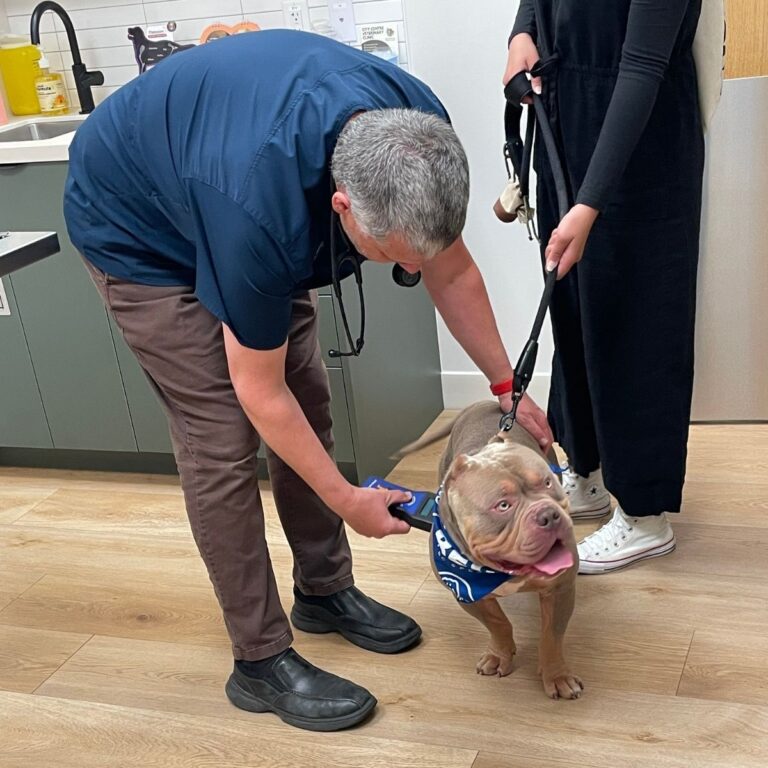
The first month shapes your puppy’s habits and protection plan.
Understand the Vaccination Schedule in BC
Your vet will outline core vaccinations based on your puppy’s age. These typically include protection against:
- Parvovirus
- Distemper
- Adenovirus
- Rabies
Follow the timeline closely. Until vaccinations are complete, avoid high-risk dog parks and unknown dogs.
Microchipping Your Puppy in BC
Microchipping is one of the most important steps in responsible pet ownership.
A microchip is a tiny device implanted under the skin that stores a unique identification number. It does not track your puppy, but it allows shelters and veterinary clinics to identify them if they are ever lost.
If your puppy was adopted from a shelter, ensure the shelter has transferred the microchip info to your contact details they may already be microchipped. If not, your vet can implant one quickly and safely.
But here is what many new owners do not realize.
A microchip only works if it is registered.
Register the Microchip Immediately
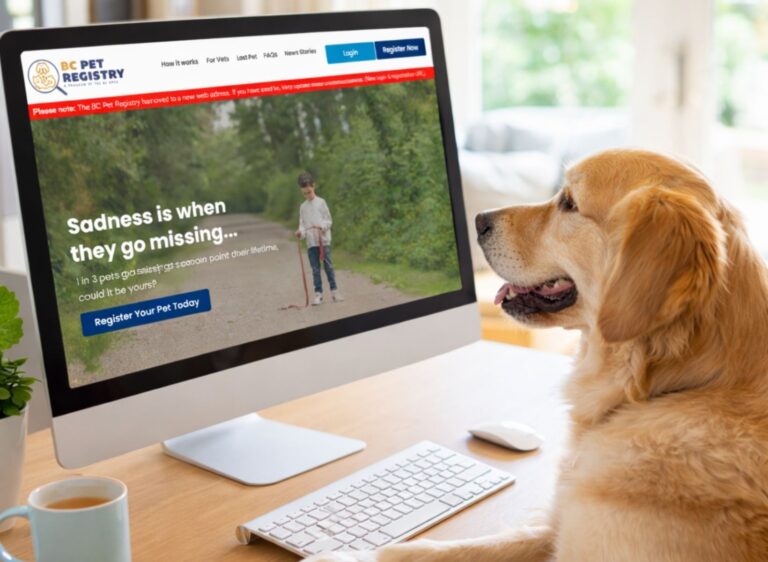
After your puppy is chipped, make sure you:
- Confirm the microchip number
- Know which registry holds it
- Complete registration with your current contact details
- Add a backup emergency contact
If you move or change phone numbers, update your information right away.
Microchipping your puppy in BC is the first step. Registering it ensures it actually protects them.
Check Local BC Dog Licensing Requirements
Many BC municipalities require annual dog licensing.
Licensing:
- Supports local animal services
- Helps return lost pets faster (if the collar tag is still with the pet and not lost)
- May be required for certain housing situations
Check your city’s website for 2026 requirements and deadlines.
Training and Socialization
Protection is not only about identification. It is also about preparation.
During the first few months:
- Begin basic obedience training
- Socialize with safe, vaccinated dogs
- Introduce new environments gradually
- Reward calm behaviour
A well-socialized puppy is less likely to panic and bolt in unfamiliar situations later in life.
Preparing for the Unexpected
It is easy to assume accidents will not happen.
But doors get left open. Fences fail. Fireworks startle. Storms roll in.
As part of your 2026 puppy checklist, make sure you:
- Keep recent photos of your puppy
- Store vet records in an accessible place
- Know your nearest BC SPCA location
- Verify microchip registration once a year
Ten minutes of preparation can prevent days of heartbreak.
Be a Part of the 80% Responsible Owners
During our recent events, we scanned hundreds of pets, all with microchips implanted. Only to discover that approximately 20% of the pets’ microchips are not linked to any registries in North America. We recommend all pet owners to double check their pet’s registration and directly registering with us. All you need is the microchip number and/or tattoo code to start the online registration process. For a small, one-time fee of $45, your pet will be protected for a lifetime and you will also have contributed to the life-saving work of the BC SPCA.
The Bottom Line
The first year with your puppy moves quickly. They grow. They learn. They test boundaries.
But what you put in place during those early weeks lasts their entire life.
Responsible ownership is not about fear. It is about readiness.
If your puppy is microchipped, take a moment today to make sure the registration is complete and accurate. Register your puppy’s microchip and keep your contact details up to date as your life changes.
Because loving your dog starts with being ready for whatever life brings.
FAQ
Q: When should I microchip my new puppy?
Your veterinarian can microchip your puppy during one of their early vaccination visits. Ask about microchipping puppy BC options at your first appointment.
Q: Does microchipping replace a collar and tag?
No. A collar and visible ID tag provide immediate contact information. A microchip is permanent backup identification.
Q: How do I register my puppy’s microchip in BC?
After implantation, confirm the microchip number and complete registration with the appropriate registry. Make sure your contact information is accurate and current.
Q: Do I need a dog licence in BC?
Many municipalities require annual dog licensing. Check your local city website for current requirements.
BC Pet Registry is a program of the BC SPCA, created in 2015 with the sole goal of reuniting more lost pets with their families. Learn more about our mission.