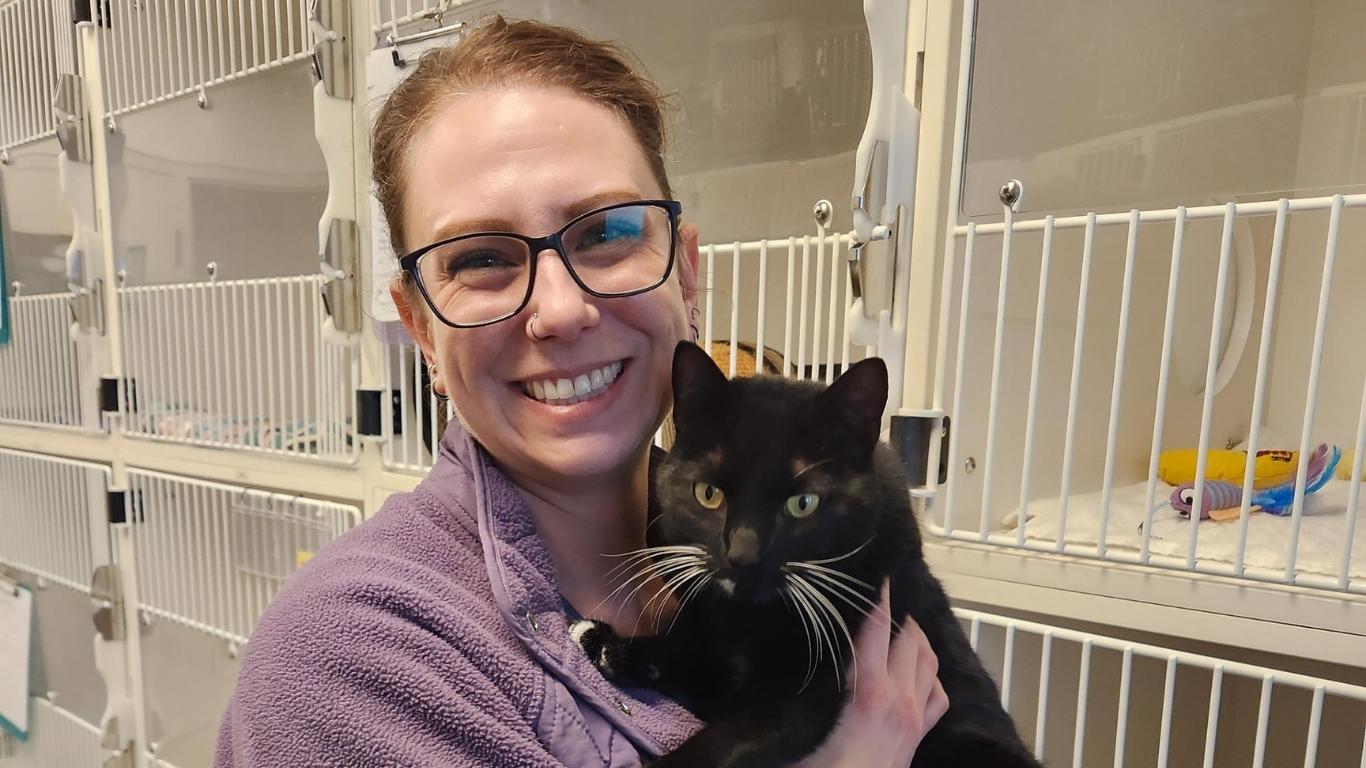
When most people think about microchipping, they picture a dog at the vet or a cat at a shelter.
But what about the rabbit in your living room?
The bird that knows your voice?
The horse that depends on you every day?
It is a question more pet guardians are starting to ask.
What pets can be microchipped?
In British Columbia, the answer goes beyond dogs and cats. And for many animals, microchipping can be just as important, sometimes even more.
Table of Contents
More Than Just Dogs and Cats
Microchipping is not limited to traditional pets.
In BC, many types of animals can be microchipped, including:
- Rabbits
- Ferrets
- Birds such as parrots
- Horses
- Some reptiles
While dogs and cats are the most commonly microchipped, veterinarians can safely implant microchips in a variety of species depending on size and anatomy.
If you are unsure whether your pet can be microchipped, your veterinarian is always the best place to start.
Why Microchipping Matters for Other Pets
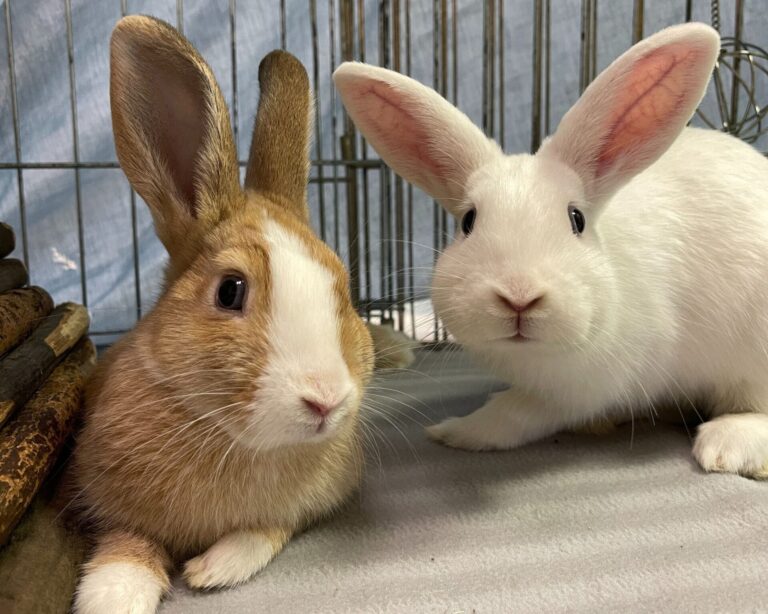
It is easy to assume that certain pets are “low risk.”
A rabbit does not go for walks.
A bird lives in a cage.
A horse stays on property.
But real life is rarely that predictable.
Rabbits can slip out during cleaning or outdoor time.
Birds can escape through open doors or windows.
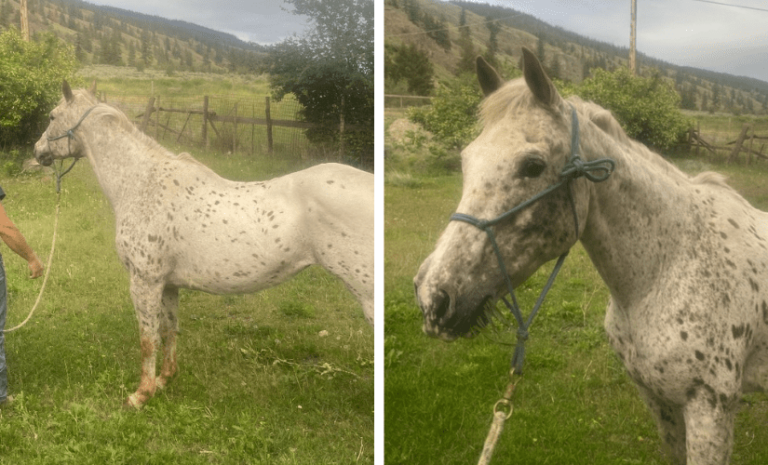
Horses can break fences or become displaced during emergencies.
And when these animals are found, identification is often the only way they make it home.
A Lost Pet Is Still a Loved Pet
One of the biggest misconceptions is that non-traditional pets are less likely to be reunited.
In reality, the challenge is not whether they are found. It is whether they can be identified.
Without permanent identification:
- A found rabbit may be assumed abandoned
- A bird may never be traced back to its home
- A horse may require extensive verification
With a microchip, that process becomes much clearer.
A scan provides a number.
That number leads to a registry.
That registry leads back to you.
How Microchipping Works Across Species
The process is similar across animals, but adapted to each species.
A veterinarian implants a small microchip under the skin. The chip contains a unique identification number.
When scanned:
- The number appears
- A registry database is checked
- The guardian’s contact details are retrieved if registered
The most important step is always the same.
Registration.
If the microchip is not registered, or the contact details are outdated, the connection cannot be completed.
You can register or update your pet’s information here:
https://bcpetregistry.ca/register/
Special Considerations for Different Animals
** Not all pets are microchipped in the same way.
Rabbits and Small Animals
Microchipping rabbits is becoming more common, especially for indoor pets who may still escape.
Because they are small, it is important the procedure is done by an experienced veterinarian.
Birds
Birds, especially parrots, are often microchipped due to their ability to fly and travel long distances if they escape.
Microchipping provides permanent identification that cannot be removed like a leg band.
Horses
Microchipping horses is widely used for identification, ownership verification, and recovery.
In some cases, it is also tied to breed registries or competitions.
Registration: The Step Many People Miss
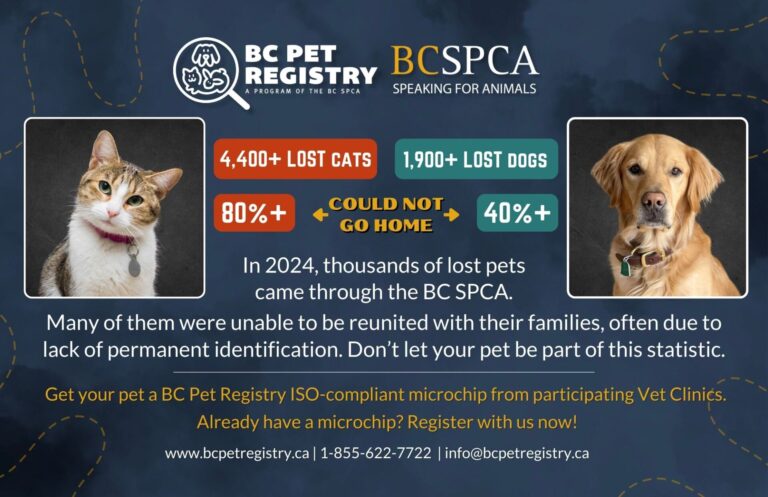
Microchipping is only the first step.
Registration is what makes it work.
Pet microchip registration BC systems allow shelters and veterinary clinics to connect that chip number to your contact information.
Without registration:
- There is no phone number to call
- No address to verify
- No way to complete the reunion
This is one of the most common gaps in pet protection.
What to Do If Your Pet Is Already Microchipped
If your pet already has a microchip, take a few minutes to confirm:
- Your contact information is correct
- Your phone number is active
- Your address is up to date
- You have a backup contact listed
Life changes quickly. Your microchip record should keep up. Login here and verify your information.
What If You Find a Non-Traditional Pet?
If you find a pet like a rabbit, bird, or other small animal:
- Do not assume it is abandoned
- Contact a veterinary clinic or animal shelter
- Ask if they can scan for a microchip
Many clinics can scan a variety of animals, not just cats and dogs.
That one step can reconnect a pet with someone who has been searching for them.
Practical Takeaways - The Bottom Line
- Microchipping is not limited to dogs and cats
- Many animals in BC can be safely microchipped
- Registration is essential for the microchip to work
- Non-traditional pets are just as vulnerable to getting lost
- A simple scan can lead to a life-changing reunion
Every pet has a story. And every pet deserves a way back home.
Whether it is a cat, a rabbit, a bird, or a horse, the goal is the same.
Connection.
Microchipping provides a permanent link between you and your pet. Registration makes that link usable.
If your pet is already microchipped, take a moment today to make sure your information is current.
Because no matter the species, when a pet is found, what matters most is that someone knows who they belong to.
Special Considerations for Different Animals
Lorem ipsum dolor sit amet, consectetur adipiscing elit. Ut elit tellus, luctus nec ullamcorper mattis, pulvinar dapibus leo.
Be a Part of the 80% Responsible Owners
During our recent events, we scanned hundreds of pets, all with microchips implanted. Only to discover that approximately 20% of the pets’ microchips are not linked to any registries in North America. We recommend all pet owners to double check their pet’s registration and directly registering with us. All you need is the microchip number and/or tattoo code to start the online registration process. For a small, one-time fee of $45, your pet will be protected for a lifetime and you will also have contributed to the life-saving work of the BC SPCA.
FAQ
Q: Can animals other than dogs and cats be microchipped?
Yes. In BC, animals such as rabbits, birds, horses, and some exotic pets can be microchipped depending on their size and health.
Q: Is microchipping safe for small pets like rabbits?
When performed by a qualified veterinarian, microchipping is considered safe for many small animals.
Q: Can birds be microchipped instead of using leg bands?
Yes. Microchipping provides permanent identification that cannot be removed like a band.
Q: Do I need to register my pet’s microchip?
Yes. Registration is essential. Without it, the microchip cannot connect your pet back to you.
Q: Where can I register my pet’s microchip in BC?
You can register or update your pet’s information at:
https://bcpetregistry.ca/register/
Q: Are there any additional charges after I register my pet?
Unlike other registries, the one-time $45 fee includes unlimited updates at no extra cost. This covers adding co-owner information, updating your pet’s medical records, and making any other changes as needed. We do not charge for updates, nor do we upsell additional services.