
Most puppies in BC get their first core vaccine at 6 to 8 weeks old, then a booster every 2 to 4 weeks until they’re at least 16 weeks old. Rabies comes at around 3 months, a booster follows within the year, and one of those early vet visits is the easiest time to microchip your puppy and get them registered.
That’s the general schedule in the American Animal Hospital Association (AAHA) and World Small Animal Veterinary Association (WSAVA) vaccination guidelines, which vets across Canada work from. Your vet will adjust it for your puppy’s age, health and lifestyle, so use this as a guide to what to expect and what to ask.
Table of Contents
- Puppy Vaccination Schedule at a Glance
- Why the Last Puppy Shot Has to Be at 16 Weeks or Later
- What’s in the Core Vaccine
- Is the Rabies Vaccine Required in BC?
- Other Vaccines Your BC Vet May Suggest
- Where the Microchip Fits In
- Socializing Before the Shots Are Done
- Your Puppy’s First-Year Checklist
- The Bottom Line
- Frequently Asked Questions
Puppy Vaccination Schedule at a Glance
| Age | Vaccines | Also at this visit |
| 6–8 weeks | Begin the core combination vaccine series for distemper, adenovirus and parvovirus. | First veterinary exam. Ask your veterinarian about parasite prevention and microchipping. |
| 10–12 weeks | Continue the core combination series. Core puppy vaccines are generally repeated every 2–4 weeks until at least 16 weeks of age. | Puppy socialization classes may begin as early as 7–8 weeks when appropriate precautions are followed. |
| 12–16 weeks | Continue core vaccines. Leptospirosis vaccination can begin at 12 weeks, with a second dose 2–4 weeks later under AAHA guidance. Discuss rabies timing with your veterinarian. | If your puppy is microchipped, make sure the chip is registered and your contact information is current. |
| 16 weeks or older | Give the final dose in the initial core puppy series. WSAVA emphasizes that the final core dose should be given at 16 weeks or older. | Continue safe socialization while following your veterinarian’s advice about disease exposure. |
| Around 6 months / 26+ weeks | WSAVA recommends an additional core vaccination at or shortly after 26 weeks for puppies that have not had protective antibody testing. | A good time to discuss your puppy’s ongoing preventive-care plan with your veterinarian. |
| Around 1 year | Review vaccine status with your veterinarian. AAHA recommends a core combination booster within one year of completing the initial series. Rabies timing depends on the vaccine used and veterinary guidance. | Annual health exam and individualized vaccine-risk review. |
| Adult dogs | Core combination vaccines are generally given no more often than every 3 years after the initial series and booster. Leptospirosis is generally boosted annually. Rabies follows the vaccine label and applicable requirements. |
The exact weeks vary from clinic to clinic. Two things don’t: the puppy doses are 2 to 4 weeks apart, and the last one is given at 16 weeks or older. Kennel cough (Bordetella) isn’t on a fixed week: your vet gives it before your puppy starts daycare, boarding or classes that ask for it.
Why the Last Puppy Shot Has to Be at 16 Weeks or Later
Puppies get antibodies from their mother. Those antibodies protect them for the first few weeks, but they also stop a vaccine from working. AAHA notes they can last 13 to 15 weeks or longer, so a puppy whose shots stop at 12 weeks may not be protected at all. That’s why WSAVA calls the dose at 16 weeks or older the most important of the early ones, and why AAHA prefers a dose at 18 to 20 weeks where parvovirus is common.
Parvo is a real risk in BC. In 2026 the BC SPCA ran parvovirus vaccine clinics in Vancouver’s Downtown Eastside, after four unvaccinated adult dogs died, and in Prince George and Penticton. In June, an Okanagan vet warned that parvo can kill 80 to 90 per cent of unvaccinated dogs who catch it.
What’s in the Core Vaccine
The core shot is a combination vaccine, often written on vet records as DA2PP. It covers:
- Distemper
- Adenovirus type 2, which also protects against infectious canine hepatitis
- Parvovirus
- Parainfluenza, included in most combination vaccines
Rabies is also a core vaccine, given as its own shot.
Is the Rabies Vaccine Required in BC?
In BC, bats are the only known reservoir of rabies, but the virus can occasionally spill over into other mammals. In 2026, rabies was confirmed in skunks in both the Kootenay Lake region and downtown Vancouver. The Vancouver case involved a skunk that had contact with several people, prompting a public health notification from Vancouver Coastal Health.
These cases are considered rare spillover events rather than evidence that rabies is circulating regularly among BC skunks. Still, they are an important reminder that pets can potentially encounter infected wildlife, which is why keeping your dog’s rabies vaccination up to date is recommended, even for pets that spend most of their time indoors.
Other Vaccines Your BC Vet May Suggest
Leptospirosis
Leptospirosis is a bacterial disease that rats carry, and it has been confirmed in BC dogs. The province’s last published surveillance (2019) listed cases in Langley, Vancouver, Surrey, Ladner, Saanich and Comox, two of them 3-month-old puppies, and noted the real number is likely higher. AAHA now recommends the vaccine for most dogs. It’s two doses, 2 to 4 weeks apart, then once a year.
Kennel Cough (Bordetella)
Kennel cough spreads quickly where dogs share space: daycares, boarding kennels, vet clinics and classes. Daycares and boarding facilities set their own vaccine rules, so ask before you book. The vaccine doesn’t stop every case (in a 2021 BC outbreak, most of the sick dogs had been vaccinated), but the BC SPCA still recommends it.
Lyme Disease
Lyme risk in BC is low: fewer than 1 per cent of ticks tested here carry the bacteria. Ask your vet about tick prevention. The vaccine is mainly for dogs that travel to areas where Lyme is common.
Where the Microchip Fits In
The easiest time to microchip your puppy is during one of those early vet visits. Microchips can be implanted by a veterinarian or trained professional, and if your puppy is already under anesthesia for a procedure such as a spay or neuter, the chip can often be implanted at the same time. Learn more in the BC Pet Registry microchip FAQs.
A microchip only helps reunite you with your puppy if the number is registered and connected to current contact information. What you need to do depends on where the identification came from:
- Your puppy already has a microchip. You can register any brand of microchip with BC Pet Registry. All you need is the existing microchip number. Register a microchip with BC Pet Registry
- You adopted your puppy from the BC SPCA. If the pet was registered through the adoption process, you can access your BC Pet Registry account using the information provided at adoption. The registry recommends logging in and making sure your phone number, email and other contact details stay current. BC Pet Registry post-adoption and account FAQs
- Your puppy came from a breeder, another province or another country. A microchip from another provider can still be registered with BC Pet Registry. Current registration options are $12 annually or $45 for lifetime registration. BC Pet Registry registration information
- Your puppy has an ear tattoo. Tattoos can be registered too. If you need help tracing an ear tattoo, contact BC Pet Registry, a local veterinary clinic or animal control agency. If the tattoo is difficult to read, one of these organizations may also be able to help read it. BC Pet Registry tattoo and identification information
- Your puppy has a breeder tattoo on the abdomen or inside a leg. These tattoos may only be traceable through the original breeder. BC Pet Registry recommends contacting your local BC SPCA location or Animal Control for help. BC Pet Registry lost pet and tattoo guidance
Not sure whether your puppy’s microchip is already registered? If you have the microchip number, you can contact BC Pet Registry to check. If you do not know the number, a veterinarian, shelter or BC SPCA location can scan your puppy and provide it. Check BC Pet Registry microchip information
It is also worth keeping your contact details current. BC Pet Registry recommends reviewing your account at least once a year and updating it whenever you move or change your phone number or email address. BC Pet Registry account and contact information FAQs
Keep your puppy’s microchip or tattoo number with their vaccination and veterinary records so their important identification and health information is easy to find when you need it.
Socializing Before the Shots Are Done
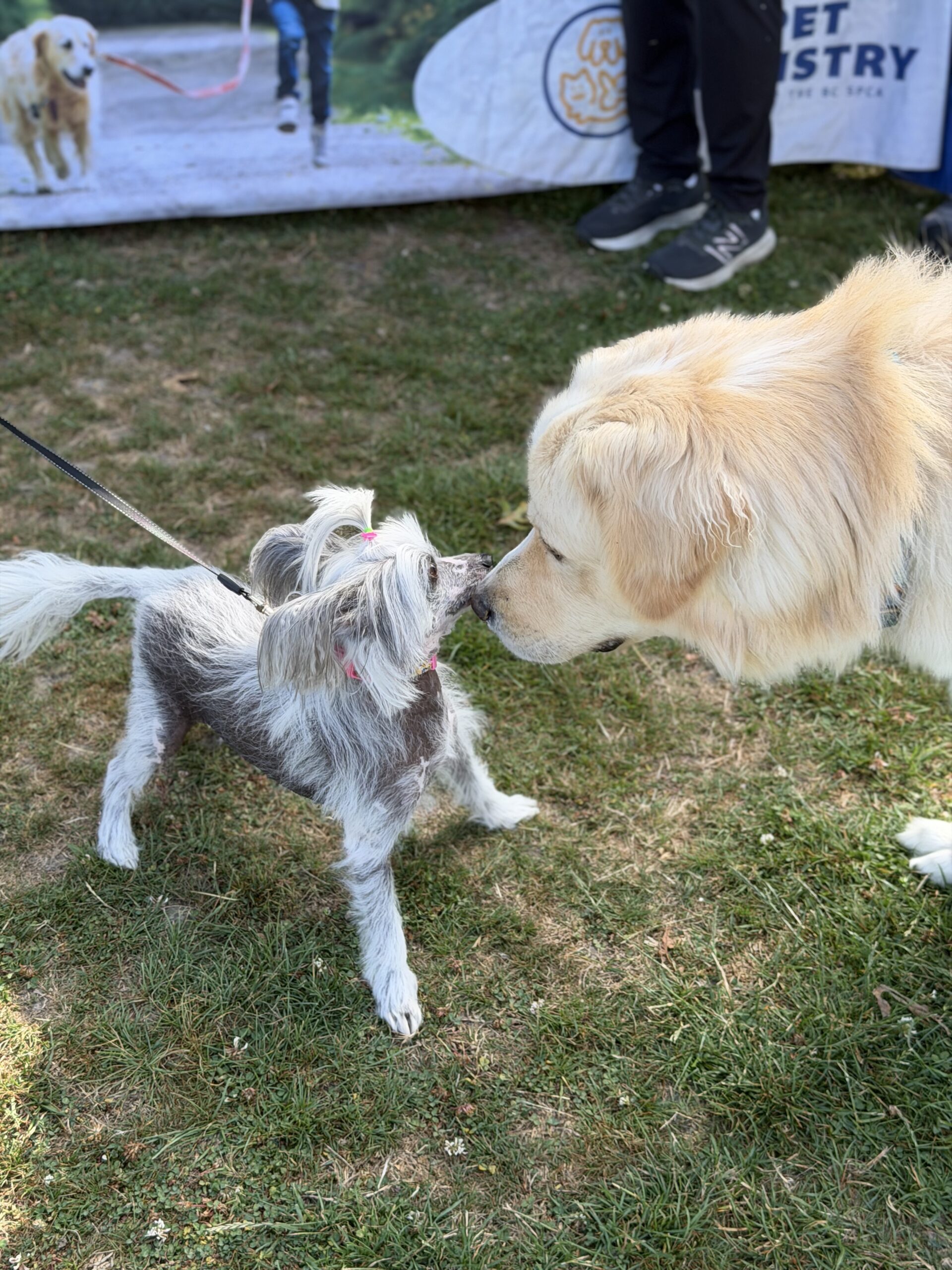
You don’t have to keep your puppy indoors until 16 weeks. The American Veterinary Society of Animal Behavior (AVSAB) says puppies can start socialization classes at 7 to 8 weeks old, as long as they had their first set of vaccines at least 7 days before the first class, have had their first deworming, and stay up to date throughout.
What to avoid until the series is finished: dog parks and other busy places where lots of dogs of unknown vaccine status go. Meeting healthy, vaccinated dogs you know is fine.
Your Puppy’s First-Year Checklist
- First vet visit booked. Ideally, schedule your puppy’s first appointment within the first few days after bringing them home. See the BC Pet Registry New Puppy Checklist
- Core vaccine series completed at 16 weeks or older. WSAVA recommends repeating core puppy vaccines every 2–4 weeks, with the final puppy dose given at 16 weeks of age or older. See the WSAVA vaccination guidelines
- Rabies vaccination discussed with your vet once your puppy is old enough. Dogs should be at least 12 weeks old for an effective rabies vaccination. See the Canadian Food Inspection Agency guidance
- Leptospirosis and kennel cough discussed with your vet. AAHA now recommends leptospirosis as a core vaccine for most dogs, while Bordetella vaccination depends on lifestyle and exposure risk. See the AAHA canine vaccination guidelines
- Microchip implanted and registration checked with your current phone number and address. A veterinarian or animal shelter can implant a microchip, but it still needs to be registered so you can be contacted if your puppy is lost. BC Pet Registry microchip information
- Microchip number kept with your puppy’s vaccination and veterinary records.
- Dog licence obtained if your municipality requires one. Requirements vary by city. In Surrey, for example, all dogs over three months old must have a current dog licence. City of Surrey dog licensing requirements
- Core booster planned within one year of finishing the puppy series. After that, core combination vaccines are generally boosted at three-year intervals. AAHA core vaccine schedule
- Spay or neuter timing discussed with your veterinarian.
For everything else to sort out during those first few weeks, use the BC Pet Registry New Puppy Checklist for BC. It covers supplies, the first vet appointment, vaccinations, identification, training, puppy-proofing and microchip registration.
The Bottom Line
Most of your puppy’s early health and identification plan gets put in place during the first few months. Core vaccines generally begin around 6–8 weeks and are repeated every 2–4 weeks, with the final puppy dose at 16 weeks or older. Rabies vaccination should be discussed with your veterinarian once your puppy is at least 12 weeks old, and your vet can help determine which additional vaccines make sense based on your puppy’s lifestyle and local risks.
Your part is simpler: keep the appointments, make sure your puppy’s microchip is registered, keep your contact information current, check your municipality’s licensing requirements, and save their vaccine and identification records somewhere easy to find.
If you live in Surrey, remember that dogs over three months old need a current city licence. Check Surrey dog licensing requirements
For a broader first-month overview, the BC Pet Registry New Puppy Checklist for BC is a useful place to start.
Frequently Asked Questions
Q: When should my puppy get their first shots in BC?
At 6 to 8 weeks old. That’s when the core combination vaccine starts: distemper, adenovirus, parvovirus and, in most vaccines, parainfluenza.
Q: How many sets of shots does a puppy need?
Usually three or four core doses, 2 to 4 weeks apart, with the last at 16 weeks or older. Then a booster within the year, and core boosters every three years after that.
Q: When can my puppy go to the dog park?
Once the puppy series is finished, at 16 weeks or later. Until then, skip dog parks and busy dog areas, but keep socializing your puppy with healthy, vaccinated dogs and in puppy classes.
Q: Is the rabies vaccine required by law in BC?
No. It’s recommended, but not required by law in BC. Bats in BC can carry rabies, so the BC Centre for Disease Control says pets should be vaccinated and kept up to date.
Q: Does my puppy need the leptospirosis vaccine?
Ask your vet. Leptospirosis is carried by rats and has been confirmed in dogs in the Lower Mainland and on Vancouver Island, and AAHA now recommends the vaccine for most dogs. It’s two doses, 2 to 4 weeks apart, then once a year.
Q: When should I microchip my puppy?
At one of the early vaccine visits, or during spay or neuter surgery. Most puppies can be microchipped by about 8 weeks old.
Q: Do I have to pay to register my puppy’s microchip?
It depends on the chip. BC Pet Registry microchips implanted by BC vets include lifetime registration at no extra cost, and BC SPCA adoptions come already registered. Other chips cost $45 for lifetime registration, or $12 a year.