
You call him “our dog.”
The veterinary clinic usually calls your partner. Your parents look after him every other weekend. You originally completed the adoption paperwork, and somewhere along the way, your name ended up connected to his microchip.
So if he ever gets lost, who should actually be the person everyone calls?
It is an easy detail to overlook when a pet belongs to a family rather than one person.
Couples move in together. Children grow up and leave home. Pets spend time between households. Relationships change. The person who originally registered a pet may not always remain the person best positioned to respond years later.
So, whose name should be on your pet’s microchip?
There is no one answer for every family. The important thing is making sure the contact information associated with your pet reflects who is currently responsible for them and who can respond if they are found.
Table of Contents
Start With the Person Who Is Primarily Responsible for the Pet
When deciding whose information should be associated with your pet, start with the practical question:
Who is most likely to take responsibility if this pet is found?
That may be the person who:
- lives with the pet most of the time
- schedules their veterinary care
- can collect them from a shelter or veterinary clinic
- knows their medical and identification information
- is most consistently reachable
For many households, the answer is obvious.
For others, it is not.
A couple may share every aspect of their pet’s care equally. A family dog may technically have been adopted by one person but spend most of their time with another. An adult child may have originally adopted the family cat but later moved away.
The goal is not to decide who loves the pet most.
It is to make sure the registration information makes sense for the pet’s life today.
What About Couples Who Share a Pet?
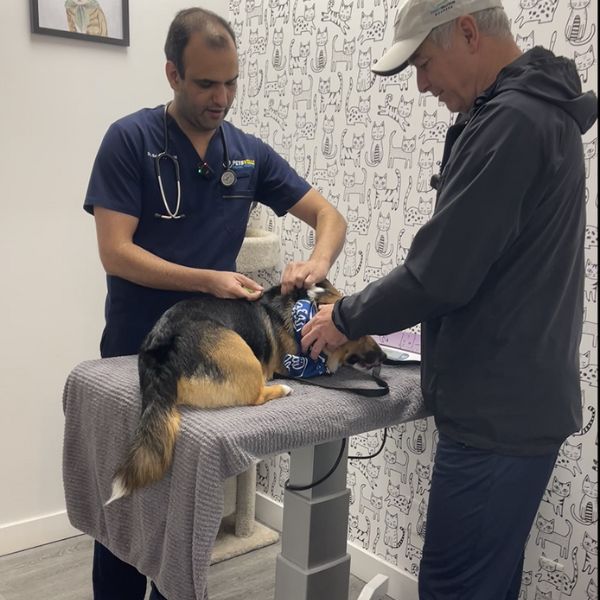
For couples, it is common to think of a pet as belonging equally to both people.
That makes sense at home, but a registration record still needs accurate contact information.
Consider who should be the primary contact and whether the other person should be listed as an appropriate alternate or emergency contact where the registry allows it.
Ask yourselves:
- Who answers their phone most reliably?
- Who usually handles veterinary appointments?
- Who could collect the pet quickly if they were found?
- What happens if one of you is travelling?
- Does the registration still contain information from before you lived together?
This is where having a reliable backup contact can add another layer of protection.
If the first person cannot be reached, there may still be someone familiar with the pet who can respond.
A Backup Contact Should Be Someone Who Can Actually Help
It can be tempting to choose a backup contact simply because they are family.
But the most useful pet emergency contact is someone who can realistically act.
Consider someone who:
- knows your pet
- knows how to reach you
- is likely to answer their phone
- understands why they have been listed
- could help if you were unavailable
For example, a parent living across the country may love your dog dearly, but a trusted neighbour or sibling living nearby may be better positioned to help during an immediate situation.
Most importantly, tell the person.
An unexpected call about somebody else’s lost pet should not be the first time they discover they are the backup contact.
This becomes especially important when someone else is temporarily responsible for your pet. BC Pet Registry’s guide on why pet sitters should know a pet’s microchip number explains what identification and emergency information a caregiver should have before you leave.
Make Sure Someone Knows Your Pet Is Waiting at Home
A backup contact is not only important when your pet goes missing.
What happens if you are the one who has an emergency?
If you become ill, are injured, or cannot return home unexpectedly, someone needs to know that your pet is there and may be waiting for food, medication, a walk, or care.
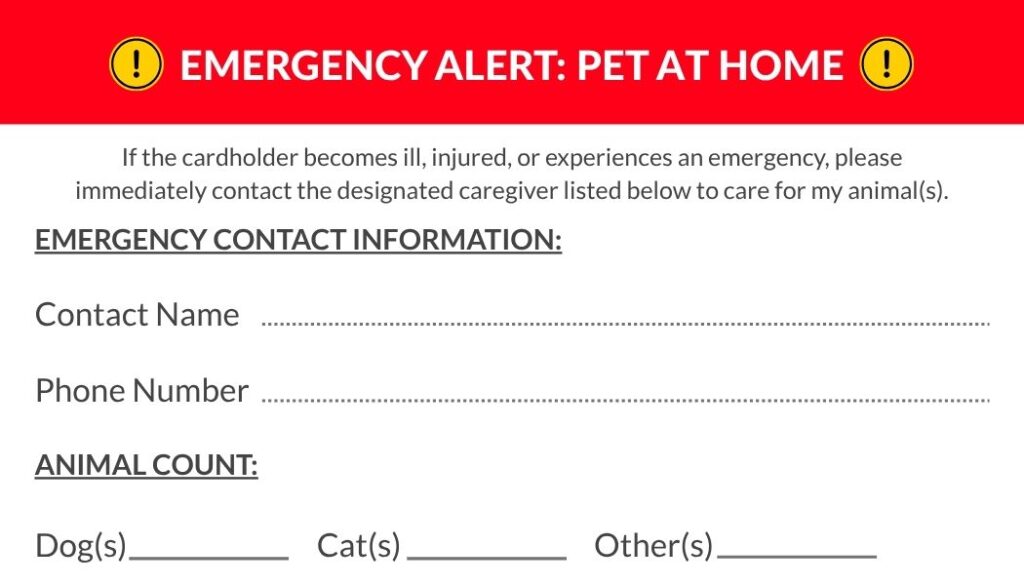
BC Pet Registry offers an Emergency Alert: Pet at Home wallet card that helps make that information easier to find.
The card can be kept in your wallet and includes space for your designated caregiver’s name and phone number, along with the number of dogs, cats, or other animals at home. If you experience an emergency, the card lets someone know there are animals relying on you and identifies the person who should be contacted to care for them.
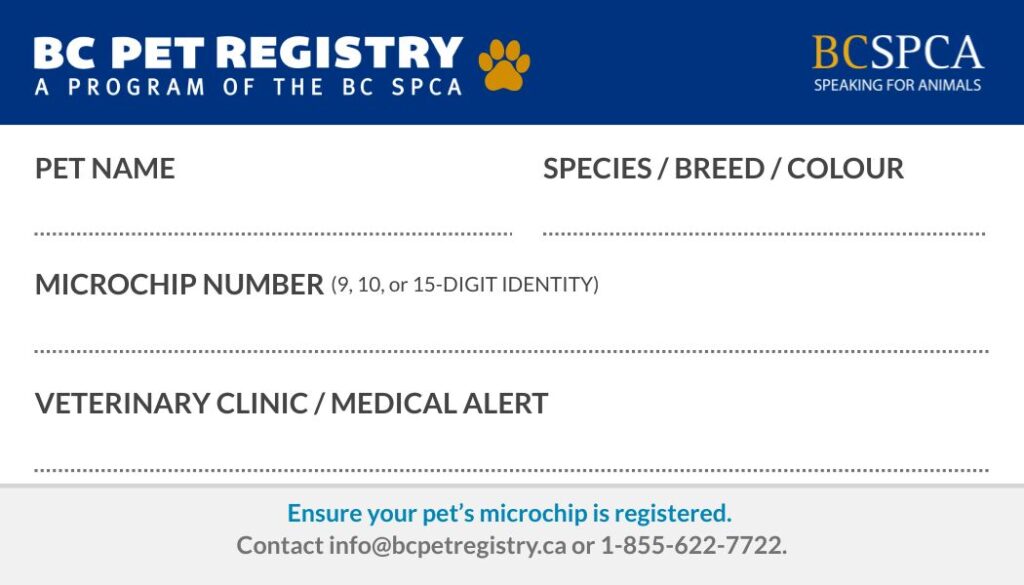
The other side keeps important information about your pet close at hand, including:
- pet name
- species, breed and colour
- microchip number
- veterinary clinic
- medical alert information
It is a small card, but it solves a problem that can easily be overlooked: your emergency contact needs a way to know they are needed.
This is especially useful for people who live alone, travel independently, have medical concerns, or simply want another layer in their pet emergency plan.
If you would like an Emergency Alert: Pet at Home wallet card, email BC Pet Registry at info@bcpetregistry.ca. A card can be mailed to you upon request.
Once you receive it, fill it out completely, keep it somewhere visible in your wallet, and let the person you list as your designated caregiver know they are your pet’s emergency contact.
That way, your plan does not stop at choosing the right person. There is also a practical way for someone to reach them when you cannot.
What If Your Pet Lives Between Two Homes?
Some pets regularly spend time in more than one household.
That could include a dog shared between family members, a pet cared for by grandparents during the week, or another arrangement where responsibility is genuinely shared.
In these situations, accurate records become even more important.
Make sure everyone responsible for the pet knows:
- the microchip number
- which registry holds the record
- who is listed as the primary contact
- who should be contacted in an emergency
- where veterinary information is kept
A collar tag can also provide immediate visible contact information, but it should complement permanent identification rather than replace it.
The important thing is consistency.
If your pet becomes lost from either home, everyone should know what information exists and what to do next.
What Happens When a Family Situation Changes?
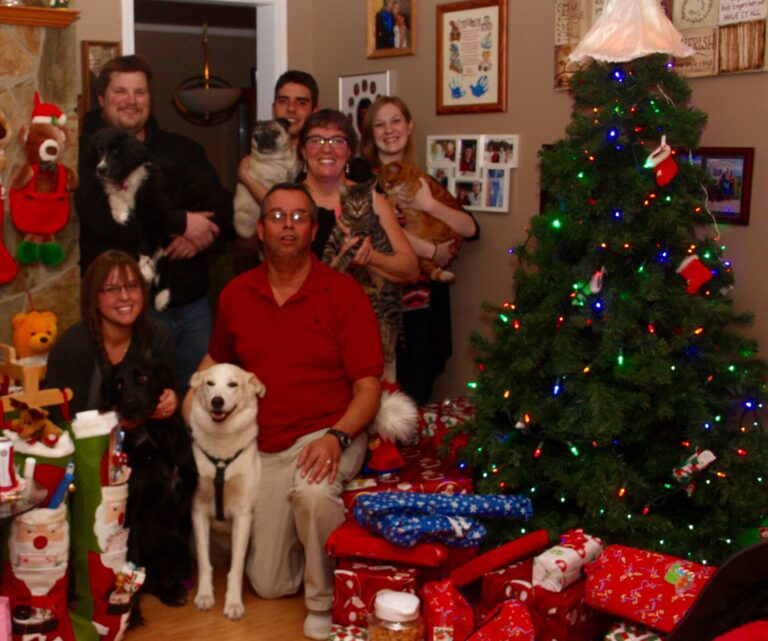
The information that made sense when your pet was first registered may not make sense forever.
Consider reviewing your pet’s registration after a major life change, including:
- moving to a new home
- marriage or moving in together
- separation
- an adult child moving away
- a pet permanently moving to another household
- a primary guardian becoming unable to care for the pet
- changes to phone numbers or email addresses
The microchip itself does not need to change because your family situation changes.
The information associated with your pet may.
That distinction is important.
A microchip is permanent identification. The contact record behind it needs to keep pace with real life.
Moving is a particularly good time to review those records. If your move brings you to British Columbia from another province or country, there can be additional considerations around your pet’s existing registration. BC Pet Registry has a microchip registration guide for newcomers to BC that explains what to check.
What If a Pet Permanently Changes Homes?
A permanent change in who cares for a pet is different from asking someone to look after them temporarily.
If a pet is rehomed, the new guardian should confirm what needs to happen with the microchip registration rather than assuming the information changes automatically.
The new guardian should know:
- the microchip number
- which registry holds the record
- what process the registry requires to update or transfer the registration
- whether the change has actually been completed
Veterinary records and microchip registration records are separate systems. Updating information at a veterinary clinic should not be assumed to automatically update a separate pet registry.
If a pet has permanently changed homes, address both.
Shared Care Does Not Mean Shared Passwords
If several people care for your pet, they should know the important identification details.
That does not necessarily mean everyone needs access to the same registry account.
Instead, make sure appropriate family members know where to find:
- the microchip number
- the registry name
- veterinary contact information
- recent photographs
- the primary guardian’s current contact details
- the backup contact
This gives people enough information to respond during an emergency without creating unnecessary confusion over who manages the actual registration.
Make Sure the Registration Was Completed in the First Place
Before worrying about whose phone number should be listed, it is worth confirming that the microchip registration was actually completed.
A microchip can be implanted without necessarily having a complete registration connected to the guardian’s current information.
If you are uncertain, do not assume everything was handled automatically when your pet was microchipped.
BC Pet Registry explains the importance of confirming the process in Why Your Pet’s Microchip Registration Confirmation Email Matters.
Once you know the registration exists, review who is listed and whether those details still reflect your household today.
Keep the Registration Consistent With Your Other Pet Records
Your microchip record should not exist in isolation.
Take a few minutes to compare it with the information you keep elsewhere.
Does your veterinarian have your current phone number?
Does your pet’s collar tag show a number someone actually answers?
Does your family know who the emergency contact is?
Do you have the correct microchip number saved somewhere accessible?
If your pet has a tattoo or municipal licence, do you have those numbers recorded too?
The easier your pet’s identification information is to understand, the easier it is for someone to act when time matters.
Give Your Pet’s Contacts an Annual Check
You do not need to think about this every month.
Once a year is a useful routine, as well as anytime something significant changes.
Ask:
- Who is currently listed as the primary contact?
- Is that still the right person?
- Is the phone number current?
- Is the email address still used?
- Is the address correct?
- Is the backup contact still appropriate?
- Does that person know they are the backup contact?
Your pet’s annual veterinary appointment or adoption anniversary can be an easy reminder.
It takes only a few minutes to discover whether information that once made perfect sense no longer reflects your family.
The Bottom Line
There is no competition for whose name belongs to a beloved family pet.
The important question is much more practical:
Who needs to be reachable if this pet is found?
Choose contact information that reflects how your pet actually lives today. Add an appropriate backup contact when possible. Make sure the people responsible for your pet know where their identification information is kept.
And when life changes, check the registration again.
Your pet’s microchip may stay with them for life.
The people, homes and phone numbers around them may not.
Keeping those details current helps make sure that if your pet is ever found, the call reaches someone ready to bring them home.
FAQ
Q: Whose name should be on a family pet’s microchip?
Consider the person who is primarily responsible for the pet and is best positioned to respond if the pet is found. The appropriate choice will depend on how your household shares responsibility and what contact options the registry provides.
Q: Can my partner be a backup contact for our pet?
If your registry allows an alternate or emergency contact, your partner may be an appropriate choice. The important consideration is whether they can be reliably reached and act if the primary contact is unavailable.
Q: Should my parents be my pet’s emergency contact?
They can be if they know your pet and can realistically help. Someone nearby who can respond quickly may be more practical than a relative who lives far away.
Q: What should I do with the microchip registration after a separation?
Review the registration and make sure it reflects the pet’s current living and care arrangements. If responsibility for the pet has permanently changed, contact the relevant registry to determine its process for updating or transferring the record.
Q: Does changing the owner at my veterinary clinic update the microchip registration too?
Do not assume it does. Veterinary medical records and microchip registry records are separate. Confirm changes directly with the registry associated with the microchip.
Q: What if my pet regularly lives at two homes?
Make sure the people responsible at both homes know the microchip number, registry, primary contact and emergency plan. Keep the registration information current and choose contacts who can respond appropriately.
Q: How often should I review the contacts associated with my pet?
A yearly review is a useful habit, but you should also check the information after moves, changes in family circumstances, new phone numbers or any permanent change in who cares for the pet.