
It happens faster than most people think.
A delivery at the door.
A window left cracked open.
A guest carrying groceries inside.
And suddenly, an indoor pet is outside.
For many guardians, the shock is immediate because the assumption felt so safe.
“My pet never goes outside.”
But indoor pets escape every day.
And when they do, they are often the least prepared for the world beyond the front door.
Understanding the most common escape risks is not about fear. It is about recognizing how ordinary moments can quickly turn into emergencies and how small steps beforehand can help bring a pet safely home.
Table of Contents
Why Indoor Pets Are Especially Vulnerable
Indoor pets are protected from many outdoor dangers.
But they are also unfamiliar with them.
A startled indoor cat may:
- Hide silently nearby
- Panic and run farther than expected
- Avoid people, even their own family
An indoor dog may:
- Become overwhelmed by traffic and noise
- Bolt unpredictably
- Struggle to navigate unfamiliar surroundings
Because they are not used to being outside, indoor pets often react from fear rather than instinct.
That is why prevention matters so much.
The Most Common Ways Indoor Pets Escape
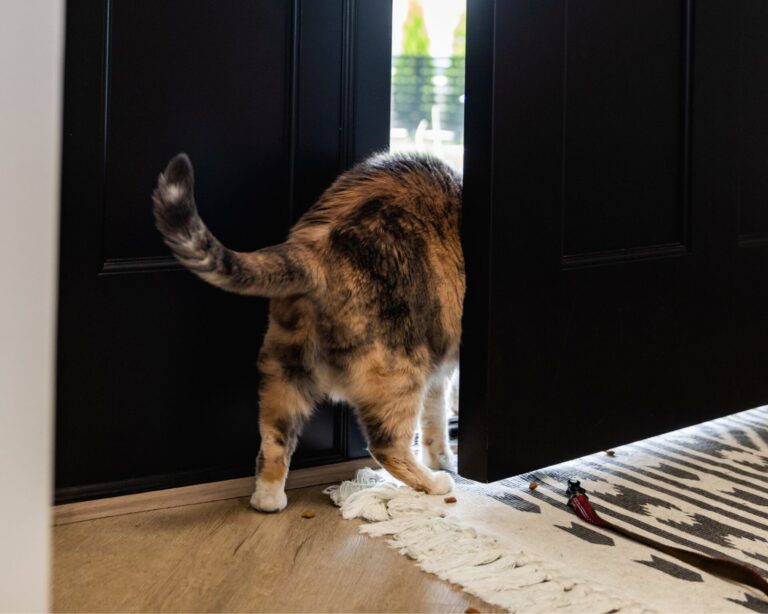
1. Open Doors During Everyday Moments
This is the most common scenario.
A visitor arrives.
Groceries are brought in.
Someone takes out the garbage.
In the few seconds a door stays open, a curious or startled pet can slip through unnoticed.
Cats are especially skilled at moving silently near feet and doorways.
2. Windows Left Open Too Far
Many guardians believe window screens are secure.
But screens can loosen, tear, or pop out under pressure.
A bird outside.
A loud noise.
A moment of curiosity.
That is sometimes all it takes.
3. Fireworks and Loud Noises
Storms, fireworks, construction, and sudden noises can trigger panic responses.
Even calm pets may react unpredictably when frightened.
Across BC, lost pet reports often increase after:
- Canada Day fireworks
- Halloween
- Windstorms
- Thunderstorms
Fear changes behaviour quickly.
4. Moving to a New Home
Moves are one of the highest-risk times for indoor pets.
Doors stay open longer.
People move in and out constantly.
Pets become stressed and disoriented.
Many indoor cats escape within the first few days of a move because they are trying to hide or return to familiar territory.
5. Temporary Care or Pet Sitting
Pets are more likely to escape when routines change.
A sitter may not know:
- where a cat hides
- how quickly a dog slips through doors
- which sounds trigger anxiety
Even well-meaning caregivers can underestimate escape risks.
The Myth That Indoor Pets Do Not Need Identification

One of the biggest misconceptions in pet safety is this:
“My indoor pet does not need a microchip because they never go outside.”
But many lost indoor pets escape unexpectedly.
And when they are found, they often have:
- no collar
- no tags
- no way to identify them
A microchip provides permanent identification that cannot fall off or be removed.
But it only works if it is registered and up to date.
You can register or update your pet’s information here: https://bcpetregistry.ca/register/
Why National Conversations Around Pet Identification Matter

Lost pet prevention is not just a local issue. Across Canada, animal welfare organizations continue working together to improve how pets are identified and reunited with their families.
Recently, BC Pet Registry participated in Humane Canada’s Summit for Animals, where leaders across the country gathered to discuss animal welfare, responsible pet guardianship, and the systems that help protect pets when the unexpected happens.
You can read more about that event here:
👉 https://bcpetregistry.ca/stories/information/bc-pet-registry-microchips-humane-canadas-summit-for-animals/
These conversations matter because every improvement in awareness, identification, and reunification practices helps more pets make it safely back home.
What To Do Immediately If Your Indoor Cat Escapes
Indoor cats behave differently from outdoor cats when lost.
Instead of roaming widely, many hide very close to home.
If your indoor cat escaped:
- Search quietly nearby first
- Check under decks, bushes, and sheds
- Go outside during quieter evening hours
- Bring treats or familiar sounds
- Alert neighbours immediately
- Contact local shelters and veterinary clinics
Most importantly, act quickly.
The first hours matter.
Prevention Starts Before the Emergency
You cannot prevent every accident.
But you can reduce risk significantly.
Create a Door Routine
Before opening doors:
- Know where your pet is
- Use baby gates if needed
- Ask guests to be mindful
Secure Windows and Screens
Check screens regularly for:
- tears
- loose edges
- weak frames
Never assume they are escape-proof.
Prepare for Loud Events
Before fireworks or storms:
- Keep pets indoors early
- Close windows and curtains
- Create a quiet, safe space
Keep Identification Current
Even indoor pets need:
- microchips
- updated registration
- backup contacts
Preparation is what turns panic into reunion.
Community Awareness Makes a Difference

Many indoor pets are reunited because someone nearby notices them quickly.
A neighbour spots a frightened cat under a porch.
A passerby brings a dog to a veterinary clinic.
A shelter scans a microchip.
These reunions happen because communities pay attention.
You can explore real stories of pets reunited through identification here: https://bcpetregistry.ca/stories/
Be a Part of the 80% Responsible Owners
During our recent events, we scanned hundreds of pets, all with microchips implanted. Only to discover that approximately 20% of the pets’ microchips are not linked to any registries in North America. We recommend all pet owners to double check their pet’s registration and directly registering with us. All you need is the microchip number and/or tattoo code to start the online registration process. For a small, one-time fee of $45, your pet will be protected for a lifetime and you will also have contributed to the life-saving work of the BC SPCA.
The Bottom Line
Indoor pets may feel protected from the outside world.
But accidents happen quietly and quickly.
An open door.
A damaged screen.
A moment of fear.
And suddenly, a pet who has never been outside is trying to survive in an unfamiliar world.
Preparation does not mean expecting the worst.
It means giving your pet the best chance of finding their way home if the unexpected happens.
Because when an indoor pet escapes, the smallest details often matter most.
FAQ
Q: Do indoor cats really need microchips?
Yes. Many lost cats are indoor-only pets who escaped unexpectedly through doors, windows, or during emergencies.
Q: How far do indoor cats usually travel when they escape?
Many indoor cats stay surprisingly close to home and hide silently nearby, especially during the first few days.
Q: What should I do first if my indoor cat escapes?
Search nearby hiding spots immediately, notify neighbours, contact local shelters and veterinary clinics, and confirm your microchip information is current.
Q: Can indoor dogs benefit from microchips too?
Absolutely. Even well-trained indoor dogs can panic and run during loud events or stressful situations.
Q: Where can I register my pet’s microchip in BC?
You can register or update your pet’s information at: https://bcpetregistry.ca/register/