
No one plans to lose a pet.
Yet every year, families across British Columbia find themselves searching neighbourhoods, making phone calls, printing posters, and hoping for good news.
When emotions are running high, even simple tasks can feel overwhelming.
What was your pet’s microchip number?
Which veterinary clinic implanted it?
Do you have a recent photo?
Who should answer the phone if you’re unavailable?
Having this information organized before an emergency can save valuable time and reduce stress when every minute feels important.
A lost pet file is one of the simplest ways to prepare for the unexpected, and creating one only takes a few minutes.
Table of Contents
Why Preparation Makes a Difference
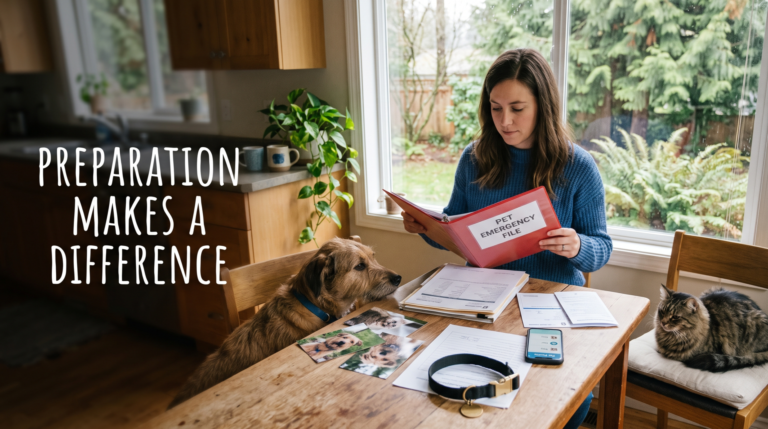
When a pet goes missing, families often focus on searching.
But behind the scenes, shelters, veterinary clinics, neighbours, and community groups are all working to help reunite lost pets with their guardians.
The faster you can provide accurate information, the easier it becomes for others to help.
A lost pet file gives you everything you need in one place, whether you are creating posters, contacting a shelter, or updating an online lost pet report.
1. Keep Recent Photos of Your Pet
Your phone is probably full of pictures.
But are they useful if your pet goes missing?
Choose several photos that clearly show:
- your pet’s face
- body markings
- unique colouring
- scars or distinguishing features
- different angles
Update these photos every year, especially for young pets whose appearance changes quickly.
Clear photos make it much easier for neighbours, shelters, and veterinary clinics to recognize your pet.
2. Record Your Pet’s Identification Information
Permanent identification is one of the most valuable tools in a reunion.
Your lost pet file should include:
- microchip number
- tattoo number (if applicable)
- registry name
- registration confirmation
- Certificate of Registration
If your pet has a microchip, make sure you also know which registry it is registered with.
A microchip cannot help reunite your family if the contact information attached to it is incomplete or outdated.
3. Save Important Veterinary Records
Keep copies of:
- vaccination records
- adoption paperwork
- veterinary contact information
- proof of ownership if available
These documents can help verify ownership if questions arise and may also be useful if your pet is found injured and requires medical care before you arrive.
4. Keep Emergency Contacts Together
Your file should include:
- your primary phone number
- secondary phone number
- email address
- emergency backup contact
- veterinarian’s contact information
A backup contact is especially important if:
- you are travelling
- your phone is unavailable
- you are in an area without service
Sometimes the fastest reunion happens because someone else answered the phone.
5. Keep Your Microchip Registration Current
Creating a file is only helpful if the information stays current.
Whenever you:
- move
- change phone numbers
- change email addresses
- adopt a pet with an existing microchip
take a few minutes to update your registration.
Many pet owners assume their information updates automatically.
It does not.
If you recently moved to British Columbia from another province or another country, it is also worth confirming that your pet’s microchip information can be accessed here.
Our guide explains what newcomers should know about microchip registration after relocating to BC.
👉 https://bcpetregistry.ca/stories/information/pet-microchip-registration-bc-immigrants/
These simple steps cannot prevent every escape.
But they can make reunions happen much faster.
Store Your Lost Pet File Somewhere Everyone Can Find It
A lost pet file only helps if you can access it quickly.
Consider keeping:
- a printed folder at home
- digital copies in cloud storage
- copies shared with family members
- important documents saved on your phone
The goal is simple.
When emotions are high, you should not have to search for the information you need.
Preparation is important for every pet guardian, but it can be especially valuable for older adults and the family members who help care for them. Keeping your pet’s identification, veterinary records, and emergency contacts organized makes it easier for loved ones or caregivers to step in if needed.
Learn how BC Pet Registry is helping seniors protect their pets and prepare for the unexpected:
👉 https://bcpetregistry.ca/stories/information/help-seniors-protect-their-pets/
Community Makes Every Reunion Possible
Finding a lost pet is rarely the result of one person’s efforts alone.
Neighbours share sightings.
Veterinary clinics scan microchips.
Shelters care for found animals.
Community members spread lost pet posts.
When everyone has accurate information, those connections happen faster.
BC Pet Registry also works alongside veterinary clinics and animal welfare organizations across the province to help strengthen the network that reunites pets with their families.
Learn more here:
👉 https://bcpetregistry.ca/stories/information/bc-pet-registry-microchips-veterinary-clinics/
The Bottom Line
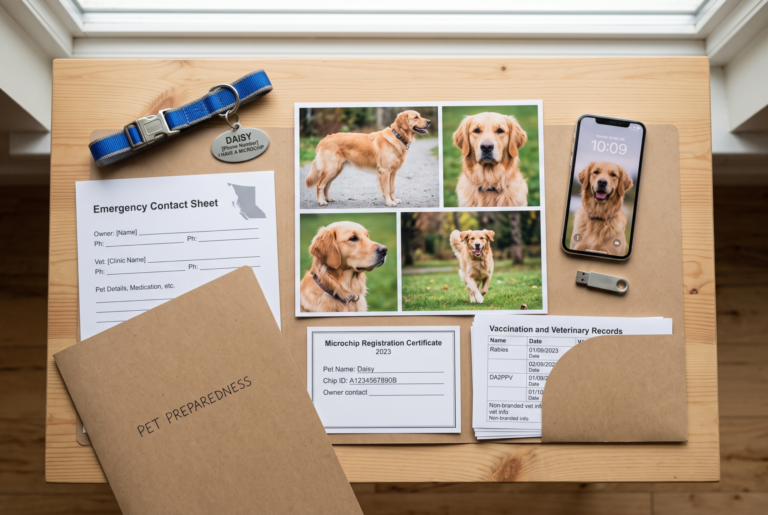
A lost pet file is something you hope you never need.
But if the unexpected happens, it can become one of the most valuable tools you have.
Recent photos.
Identification numbers.
Emergency contacts.
Veterinary records.
Everything organized before you need it.
Preparation cannot prevent every pet from becoming lost.
But it can make the search faster, reduce stress, and help the people trying to help you do their jobs more effectively.
Because when every minute matters, being prepared gives your pet the best possible chance of finding their way home.
Be a Part of the 80% Responsible Owners
During our recent events, we scanned hundreds of pets, all with microchips implanted. Only to discover that approximately 20% of the pets’ microchips are not linked to any registries in North America. We recommend all pet owners to double check their pet’s registration and directly registering with us. All you need is the microchip number and/or tattoo code to start the online registration process. For a small, one-time fee of $45, your pet will be protected for a lifetime and you will also have contributed to the life-saving work of the BC SPCA.
FAQ
Q: What should I include in a lost pet file?
Your file should include recent photos, your pet’s microchip or tattoo number, veterinary records, registration information, emergency contacts, and proof of ownership if available.
Q: How often should I update my lost pet file?
Review it at least once a year and whenever your contact information, address, veterinarian, or emergency contacts change.
Q: Should I keep digital or printed copies?
Both. Digital copies are easy to access from anywhere, while printed copies can be helpful if your phone is unavailable during an emergency.
Q: Why is my pet’s microchip number important if they’re already wearing a collar?
Collars and tags can fall off or become damaged. A registered microchip provides permanent identification that stays with your pet for life.
Q: I recently moved to BC. Should I check my pet’s microchip registration?
Yes. If your pet was microchipped in another province or another country, confirm that your registration information is current and accessible in Canada.